

Creating a beautiful lawn doesn’t have to be a long, frustrating process. When dealing with patchy grass, bare soil, or starting from scratch, spray grass seeding offers a fast, efficient, and cost-effective solution, or so the claims go.
With the growing popularity of this seeding technique, you might wonder: is it just hype, or is it truly the perfect solution for creating a beautiful lawn?
Today, we break down everything you need to know about spray seeding including how it compares to other methods like sod and traditional broadcasting, the types of grasses best suited for it, and the ideal conditions for application.
Whether you’re a homeowner, landscaper, or business owner, come along to discover if hydroseeding is the solution to your sowing woes.
Key Takeaways
- Spray grass seed offers fast, even growth ideal for large or sloped areas.
- Hydroseeding provides better moisture retention than traditional seeding methods.
- Professional application ensures even coverage, proper mix, and long-term results.
- Choosing the right seed mix depends on region, soil, and lawn usage needs.
- What is Spray Grass Seed?
- Hydroseeding vs. Traditional Seeding and Sod
- Benefits of Spray-On Grass Seed
- Disadvantages of Spray-on Grass Seed
- Best Grass Types for Spray-On Grass Seeds
- What are the Best Conditions for Spray Grass Seed?
- Does Professional Hydroseeding Make a Difference?
- Frequently Asked Questions
- Ready to Grow Your Dream Lawn?
What is Spray Grass Seed?
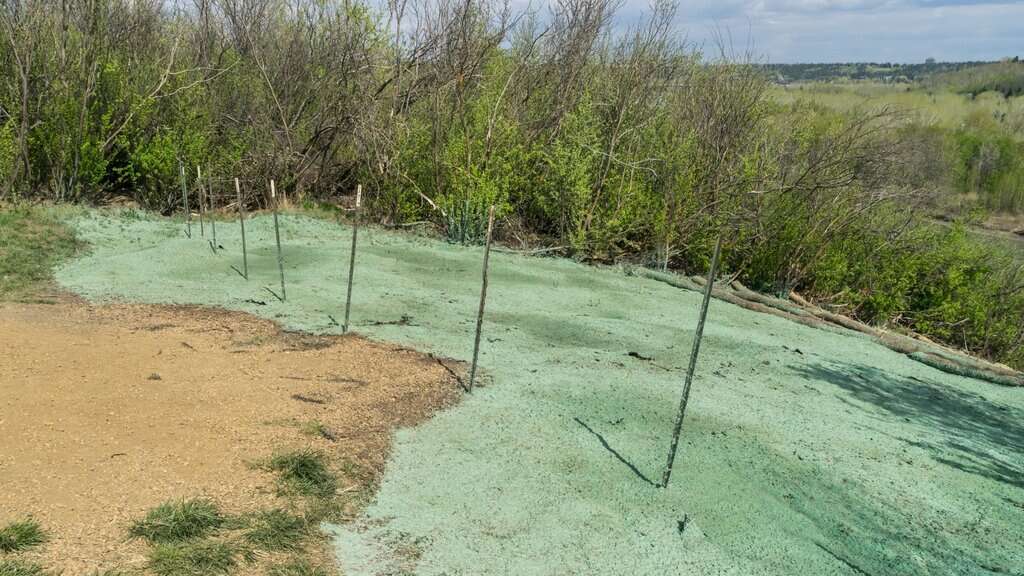
Spray grass seed, or hydroseeding, is a lawn seeding technique that combines grass seed, water, mulch, fertilizer, and binding agents into a slurry that you spray over the soil using specialized equipment.
This mixture holds grass seed in place, helps keep the soil consistently moist, and facilitates seed germination more efficiently than traditional seeding methods.
Although spray seeding was originally developed for large-scale erosion control projects, it’s now commonly used in commercial and residential landscaping.
Hydroseeding offers fast, uniform grass growth and is effective on flat, steep slopes, or areas where traditional techniques might fail.
The key components of a standard hydroseeding mix include:
- Grass seed: Tailored to your region, climate, and lawn needs
- Mulch: Which helps retain moisture and protects the seeds from the elements
- Water: Activates germination and keeps the mixture hydrated
- Fertilizer: Provides essential nutrients for early growth
- Tackifier (optional): Binds the mixture to the soil to prevent runoff and erosion
Once sprayed onto prepared soil, the slurry forms a protective layer that insulates the seeds and helps lock in moisture in a process known as hydromulching.
This creates an ideal environment for rapid germination and early root development, with results usually visible within a week under the right conditions.
Hydroseeding vs. Traditional Seeding and Sod
Hydroseeding, traditional sowing, and sod are the most common methods of planting grass. Each technique has its advantages and disadvantages depending on your goals and budget, and the size of your lawn.
Here’s a comparison to paint a clearer picture of how they stack up against each other:
| Feature | Spray Grass Seed | Traditional Seeding | Sod |
| Speed of Results | Germination in 5-10 daysFull lawn in 3-4 weeks | Germination in 5-10 daysFull lawn in 1-2 months | Full lawn coverage immediately, root established within about 2 weeks |
| Cost | Moderate, more affordable than sod | Low, ideal if you’re on a tight budget | High, mostly due to material and labor costs |
| Labor and Equipment | Requires professional service and spray equipment | DIY friendly with minimal tools required | Labor-intensive, usually needing professional installation |
| Lawn Uniformity | Very even coverage | Can result in uneven growth if not carefully applied | Very uniform if installed properly |
| Root Development | Deep-rooting for long-term lawn health | Develops strong roots over time | May have shallow roots if not installed well |
| Best Use Cases | Medium to large areas, slopes and erosion-prone areas | Small lawnsPatch repair | Instant resultsHigh traffic areas |
Benefits of Spray-On Grass Seed
Spray grass seed offers a wide range of benefits that make it an attractive option for both small residential lawns and large commercial properties, including:
- Faster Germination and Growth: The hydroseeding slurry creates a moist, nutrient-rich environment that helps seeds germinate quickly. This accelerated growth is ideal for anyone looking to establish a new grass in a shorter time frame.
- Even Seed Distribution: Spraying ensures a uniform coating of seed and mulch across the soil, minimizing patchiness and promoting a healthy green lawn.
- Superior Moisture Retention: The mulch in the slurry mix helps retain moisture around the seeds, reducing the risk of drying out. This is especially useful in areas with irregular rainfall or during a dry spell.
- Cost-Effective Alternative to Sod: Although effective, sod is typically more expensive and labor-intensive. Hydroseeding offers a middle ground by being less costly than sod, but faster and more reliable than traditional seeding.
- Erosion Control: Spray seeding is effective on slopes and areas prone to erosion. The tackifier in the slurry mixture helps anchor the seeds and mulch to the soil, preventing runoff and helping vegetation take hold.
Disadvantages of Spray-on Grass Seed
While hydroseeding offers numerous benefits, it’s important to consider these potential drawbacks:
- Higher Initial Cost: Hydroseeding typically costs more upfront than traditional seeding methods, though it remains more affordable than sod installation.
- Professional Equipment Required: Unlike broadcast seeding, hydroseeding isn’t truly DIY-friendly, requiring specialized machinery and expertise for proper application.
- Weather Sensitivity: Heavy rains shortly after application can wash away the slurry before seeds establish, particularly on steeper slopes.
- Water Requirements: Newly hydroseeded lawns demand consistent moisture during establishment, requiring more frequent watering than mature lawns.
- Seasonal Limitations: In the Midwest, the application window is restricted to spring and fall for cool-season grasses when temperatures and moisture levels are optimal.
- Uneven Results: Without proper soil preparation, hydroseeding can result in patchy growth, especially in areas with poor soil quality.
Best Grass Types for Spray-On Grass Seeds
One of the biggest advantages of spray grass seeding is the ability to customize your seed mix to match your lawn’s specific conditions. Here are some of the most popular grasses used in spray seeding, and their ideal growing conditions:
| Grass Type | Best For | Climate Zone | Notes |
| Tall Fescue | Drought tolerance, durability | Cool and transitional zones | Deep roots, low maintenanceGood for high-traffic areas |
| Kentucky Bluegrass | Dense, lush appearance | Cool climates | Slower germination, but excellent visual appeal |
| Perennial Ryegrass | Quick germination, erosion control | Cool climates | Ideal for overseeding or establishing temporary cover |
| Bermudagrass | Heat tolerance, high traffic | Warm climates | Fast-growing, but not suitable for shaded areas |
| Zoysiagrass | Drought resistance, low mowing frequency | Warm and transitional zones | Slow to establish but very low maintenance |
How to Choose the Right Grass Seed Mix
To achieve the best results, you need a blend of grasses that complement each other. This balanced mix ensures your lawn maintains a healthy, lush appearance regardless of conditions.
Get in touch with your local lawn care and landscaping professionals for help selecting the best mix based on:
- Sunlight exposure
- Soil type and pH
- Water availability
- Lawn usage
What are the Best Conditions for Spray Grass Seed?
While hydroseeding is a powerful method for establishing a lawn, it still relies on proper timing, preparation, and lawn maintenance to deliver the best results. Here are some key points to remember:
Best Time to Spray Grass Seed
The ideal time to plant grass seed depends on your region and ideal grass types. But in general:
- For cool-season grasses: Apply in early spring or fall when soil temperatures are warm but air temperatures are cool.
- For warm-season grasses: Apply in late spring to early summer after your soil consistently hits 65°F or higher.
Seeding during the optimal growing season will ensure faster germination and healthier root development
Soil Preparation
Proper soil prep sets the foundation for success:
- Clear the area of rocks, weeds, and old sod or dead grass
- Loosen the topsoil 2-3 inches deep to improve seed-to-soil contact
- Test the soil pH and adjust if necessary (ideal range: 6.0–7.0)
- Add topsoil or compost if your soil is poor or compacted
Watering Schedule
Moisture is critical in the early stages of growth:
- Water lightly 2-3 times every day for the first two weeks to keep the mulch moist
- After germination, reduce to once per day, then taper to 2-3 times per week once the grass is established
- Avoid overwatering, which can lead to fungal growth or seed washout.
Maintenance Tips
- Avoid foot traffic during the first few weeks
- Hold off on mowing until your grass is 3-4 inches tall
- Apply a starter fertilizer as needed to support healthy growth
- Watch for signs of weeds or disease, especially if the lawn is stressed
Does Professional Hydroseeding Make a Difference?
Hydroseeding is a game-changer for establishing a healthy, lush lawn. However, the quality of your results depends heavily on proper application. Here’s why you should consider professional help with your hydroseeding project:
- Customized solutions for your lawn: When you hire a professional, they will assess your soil condition, sunlight exposure, drainage, and climate and recommend the ideal seed mix and fertilization plan. This will ensure you grow the right grass for long term success.
- Proper equipment and technique: A professional team like SunCo has the tools and experience to ensure even coverage, avoid waste, and maximize germination. You may not be able to achieve the same results with DIY equipment.
- Time and cost efficiency: Experts ensure maximum efficiency by getting things right the first time. DIY hydroseeding comes with the risk of mistakes which may lead to delays, bare patches, or even full redos.
- Ongoing Lawn Support: Lawn care companies typically offer follow-up services such as watering schedules, fertilization, and weed control to ensure your new lawn stays healthy long after the initial application.
Frequently Asked Questions
How Long Does It Take for Spray Grass Seed to Grow?
Germination takes anywhere from 5-10 days, depending on the grass type and weather conditions. Most lawns reach full coverage in 3-4 weeks, though some slower-growing grasses may take longer.
Can You Walk On the Lawn After Hydroseeding?
Germination takes anywhere from 5-10 days, depending on the grass type and weather conditions. Most lawns reach full coverage in 3-4 weeks, though some slower-growing grasses may take longer.
Is Spray Seeding Better Than Regular Seeding?
Depending on your needs. Spray seeding offers faster results, better coverage, and improved moisture retention, making it ideal for larger areas and challenging terrain. Traditional methods may be fine for small lawns on a tight budget and highly sloping areas.
Does Spray Grass Seed Work on Slopes?
Yes. Hydroseeding is one of the best options for steep slopes and other erosion-prone areas, thanks to the tackifier that helps the seed mix adhere to the soil.
Can I Hydroseed My Lawn Myself?
Yes, you can technically use a DIY kit. However, to achieve the best results, especially when working on a large or uneven area, it’s best to hire a professional. Proper mixing ratios, equipment, and application techniques are key to success.
Ready to Grow Your Dream Lawn?
Spray grass seed isn’t just a lawn care trend, it’s a smart, efficient way to establish a lush lawn that lasts. Whether you’re battling erosion on a slope, trying to fix a patchy spot on your lawn, or starting from scratch, partnering with the right team will make all the difference.
At SunCo, we specialize in professional lawn care and custom solutions designed to keep your lawn thriving no matter the conditions.
Get in touch with us today to schedule a consultation with our expert team and take the first step toward the lawn of your dreams.