
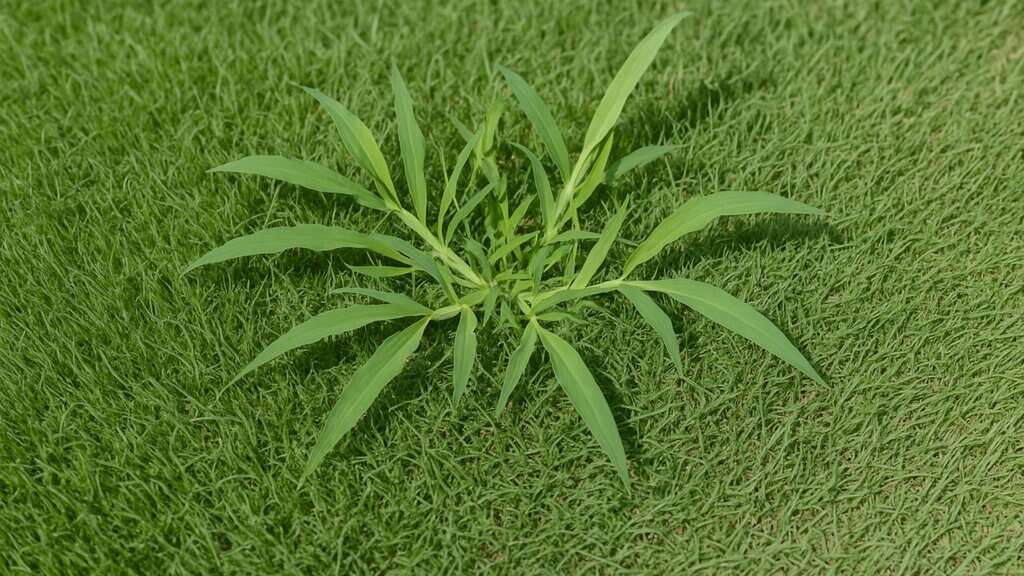
How to Identify Crabgrass
Crabgrass grows in low, star-shaped clumps that radiate outward from a central point. The blades are wider and lighter green than most lawn grasses, with a slightly coarse texture. It first appears in late spring when soil temperatures reach 55 degrees and grows aggressively through summer, producing finger-like seed heads by midsummer.
The easiest way to spot it: look for patches that are a different shade of green than your lawn, growing lower to the ground and spreading sideways rather than upright. In mowed lawns, crabgrass lays flat and spreads outward while your turf grass grows upright.
Why Crabgrass Takes Over
Crabgrass fills gaps. It thrives in thin turf, compacted soil, and areas that get full sun with short mowing heights. A single plant produces over 150,000 seeds in one season, and those seeds survive in the soil for years. Even after the parent plant dies with the first frost, the seeds wait for the next warm spring to germinate.
Lawns mowed below 3 inches, areas along driveways and sidewalks where heat radiates off pavement, and patches thinned by drought or disease are the most vulnerable. If your lawn has bare or thin spots going into May, crabgrass will find them.
Treatment Overview
Crabgrass control is almost entirely about timing. Pre-emergent herbicide applied before germination prevents 90% or more of crabgrass problems. If crabgrass is already growing, post-emergent herbicides containing quinclorac are the most effective selective option. See the detailed guides below for step-by-step treatment and prevention instructions.