

Key Takeaways
- Centipede grass thrives with nitrogen, iron, potassium, and minimal phosphorus.
- Fertilizing should be done in early spring and summer with slow-release formulas.
- Soil testing, dethatching, and proper aeration improve nutrient absorption.
- Over-fertilization weakens centipede grass and increases susceptibility to stress.
Fertilizing your centipede grass lawn sometimes seems only to benefit undesired grasses and weeds, as there’s more to fertilizer treatment than using the most popular product.
See what it takes to make the most of this warm-season grass and how to use the right fertilizer for centipede grass for optimal lawn health.
- What Is Centipede Grass?
- What Fertilizer Nutrients Does Your Centipede Grass Lawn Need?
- Handy Tips and Considerations for When Fertilizing Your Centipede Grass
- How Should You Apply Fertilizer to Your Centipede Grass Lawn?
- Best Lawn Fertilizers for Centipede Grass
- Maintenance Tips for Centipede Grass Lawns
- Care for and Beautify Your Lawn
- Frequently Asked Questions
What Is Centipede Grass?
Centipede grass is a lawn turf that actively grows from late spring through the summer. During the winter, its leaves turn brown and lose their green color until the spring rolls around.
As one of the most popular southern American lawn turfs, centipede grass dominates the yards of homeowners across Texas, around the Gulf of Mexico, Florida, and north to South Carolina.
Centipede grass doesn’t grow in the Southwest U.S. due to the aridity, the generally more alkaline soils there, and the lack of iron, a crucial nutrient for the heat-tolerant grass. However, you can find centipede grass in these parts of the Southwest.
- Tampa
- Orlando
- Pensacola
- Raleigh
- San Antonio
- Atlanta
- Arlington
What Fertilizer Nutrients Does Your Centipede Grass Lawn Need?
While it has minimal maintenance requirements, it’s not a naturally drought-resistant grass species. The main nutrients centipede grass needs to thrive are:.
- Nitrogen
- Iron
- Sulfur
- Potassium
- Manganese
Centipede grass soils don’t handle phosphorus well, so it’s important to avoid using fertilizers rich in nutrients, except as recommended by a soil test.
Handy Tips and Considerations for When Fertilizing Your Centipede Grass
Favored for its low maintenance, centipede grass needs to be fertilized with at least a pound of nitrogen per 1,000 square feet once annually in early spring.
Here are some factors to consider before using fertilizer for your centipede grass lawn
1. Pre-Emergent Herbicides
In the early spring, a pre-emergent herbicide should be applied to prevent the growth of weeds.
Centipede grass is susceptible to many pests and diseases, meaning that you’ll have to decide on using slow-release hybrid fertilizers apart from dual-functioning pre-emergent herbicides.
2. Dethatching
Depending on the state of the turf, getting it up to par may involve dethatching. Too much nitrogen in fertilizers can cause thatch growth, which hampers the effectiveness of herbicides.
Note that over-fertilizing and overwatering can also cause the thatch layer to thicken, which is common with Kentucky bluegrass and zoysiagrass. Limit dethatching to the spring and fall to eliminate any complications with weeds and pests.
Dethatching your lawn is best done by experienced lawn care experts who understand the mowing techniques needed to keep the lawn healthy and the exposed roots from drying out.
3. Watering
As you fertilize throughout the spring and summer months, ensure your centipede grass lawn gets a shower of up to one inch weekly.
Half an inch of water every three days is recommended with sandy soils. If you’re irrigating or using sprinklers, you can strategically position cans under the sprinkler at different parts of the lawn to indicate the water level.
Watering is best done between 9 PM and 10 AM to limit possible issues with fungus and moisture loss.
4. Aeration
When it’s time to fertilize your centipede lawn, you may notice thick soil clumps in compacted patches.
When the soil is thus compacted, it must be aerated to allow the fertilizers to penetrate deeper into the root systems. Without this, your centipede grass will stay thin and yellow and grow poorly.
It’s recommended that you aerate your lawn once annually and never immediately after a pre-emergent herbicide treatment, as the disruption to the soil can make it less effective.
5. Soil Amendment
Sometimes, due to unbalanced soil pH, your soil may be getting the nutrients it needs but still yield low-quality centipede grass blades.
The solution is to integrate soil amendments, which improve soil quality and plant health. Add lime to reduce acidity and sulfur to reduce alkalinity.
6. Fertilizer Formulation
If you’re using a slow-release or organic fertilizer such as banana peels for your centipede lawn, you should apply them once a year, ideally in spring. At a rate of one pound of real nitrogen per 1,000 feet, you’ll need 6.5 pounds of a 16-0-8 fertilizer ratio.
For ready-soluble fertilizers, you can apply over two stretches, in April and June. If you use a fertilizer product with 33-0-0 (33% nitrogen), you can apply 1.5 pounds in April and an identical dose in June per 1,000 square feet.
If you need an extra nitrogen boost in your centipede lawn, you can schedule a half pound of nitrogen for August.
7. Soil Test
With its relatively limited fertilizer and low mowing requirements, a soil test is required when fertilizing your centipede grass lawn with nutrients other than nitrogen.
Centipede lawns require a soil pH of 5 or 6, which is more acidic than that of other popular turfs like buffalograss, Kentucky bluegrass, and ryegrass. Homeowners closer to the southeastern coast of the US usually have such soils in their yards.
If, for some reason, your soil pH is lower, you can raise the overall acid levels with an infusion of lime or sulfur-based on the assessment from the soil test.
How Should You Apply Fertilizer to Your Centipede Grass Lawn?
To keep your centipede lawn looking beautiful year-round, fertilize the soil in early spring and summer while steadily reducing nitrogen applications just before winter.
Spring
Feed your lawns in early spring in tandem with crabgrass preventers designed for centipede grass lawns and other warm-season grasses.
Centipede grass thrives in sandy soils with limited nutrients and needs regular watering to prevent wilting or loss of color.
Summer
In the summer, you should focus on adequate watering up to one inch weekly and mowing to three inches of height.
If you’re fertilizing in the early summer, you can consider dethatching to remove growth that makes it hard for nutrients, soil, and water to reach the soil.
Fall
In the early fall, you can consider applying a potassium-rich fertilizer to protect against turf winter dormancy.
Fall is also the best time to use pre-emergent herbicides to keep winter weeds from thriving.
Application Method
Applying your fertilizer correctly to the turf is essential for the aesthetic appeal of your centipede grass lawn.
That’s why it is important to walk steadily, using a spreader, and checking its settings regularly to ensure the accuracy and consistency required to achieve a lush and pleasant lawn.
Best Lawn Fertilizers for Centipede Grass
Here are some of the top lawn fertilizer products for centipede grass for Southeast USA homeowners:
1. Superior (15-0-15) Liquid Lawn Fertilizer
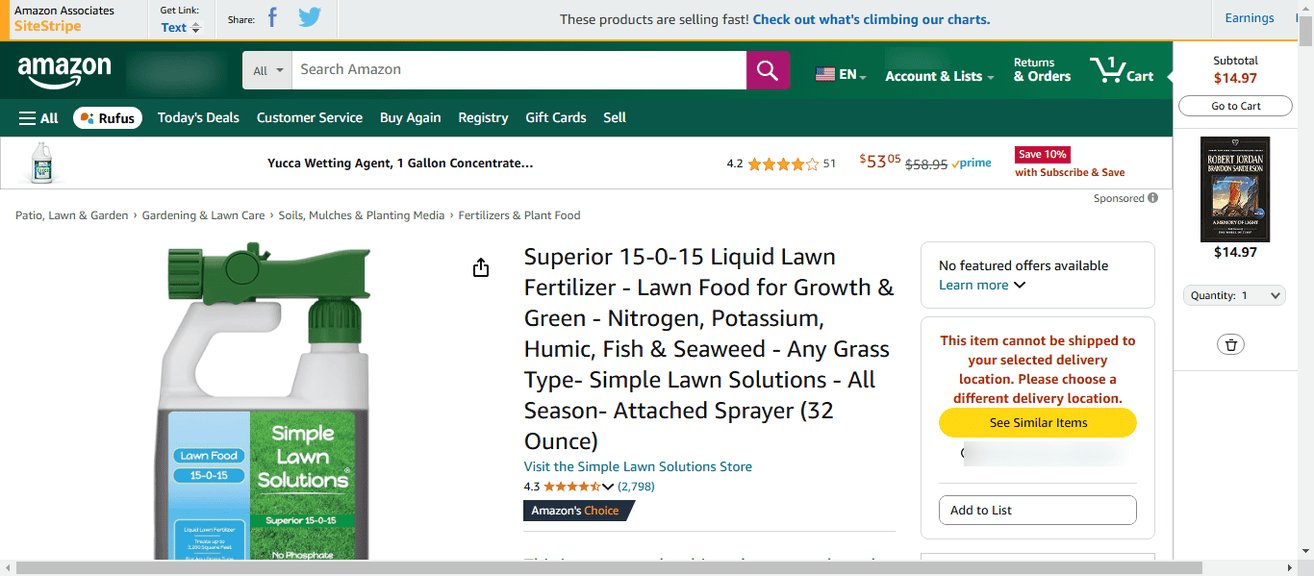
This liquid fertilizer has the nutrients required to keep your centipede grass resilient and healthy, and its humic acid helps boost nutrient uptake.
It’s rich in potassium, which can help plants better handle stress during drought, and it contains organic materials like seaweed (kelp) and fish.
2. Fertilome Centipede Grass Fertilzier
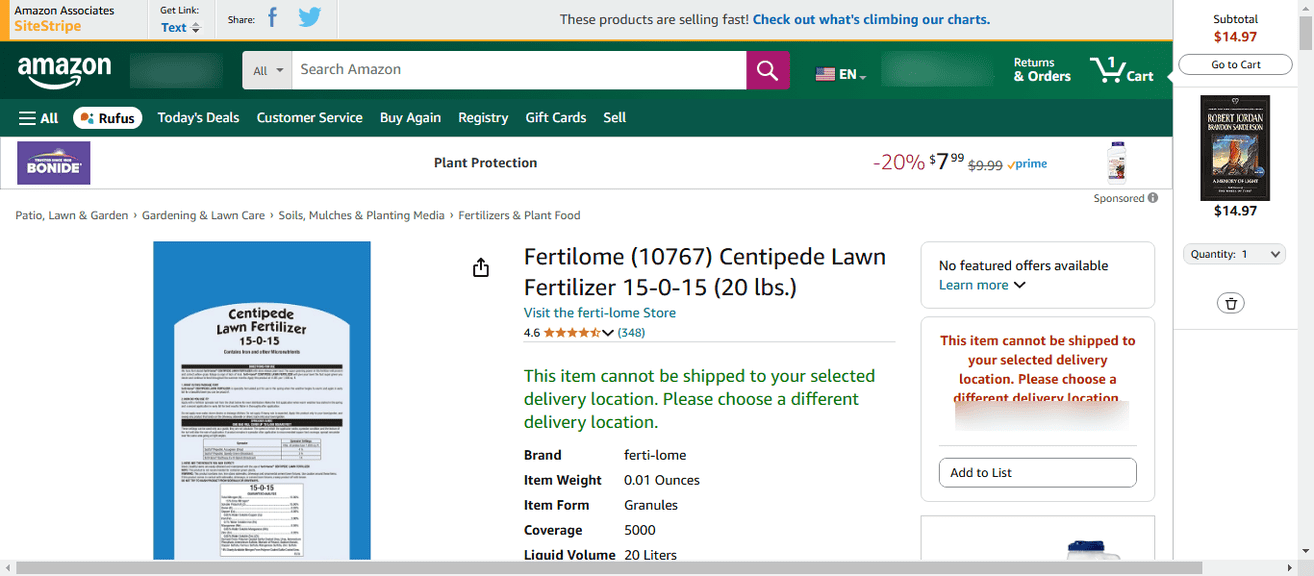
This 15-0-15 fertilizer helps keep your grass blades from turning yellow and curling, with slow-release nitrogen to protect your lawn from nitrogen burn.
Best applied in early spring and early fall, the Fertilome fertilizer isa good source of crucial micronutrients like iron, which increases your tur’s tolerance to pests and weeds.
3. Safer Brand Lawn Restore
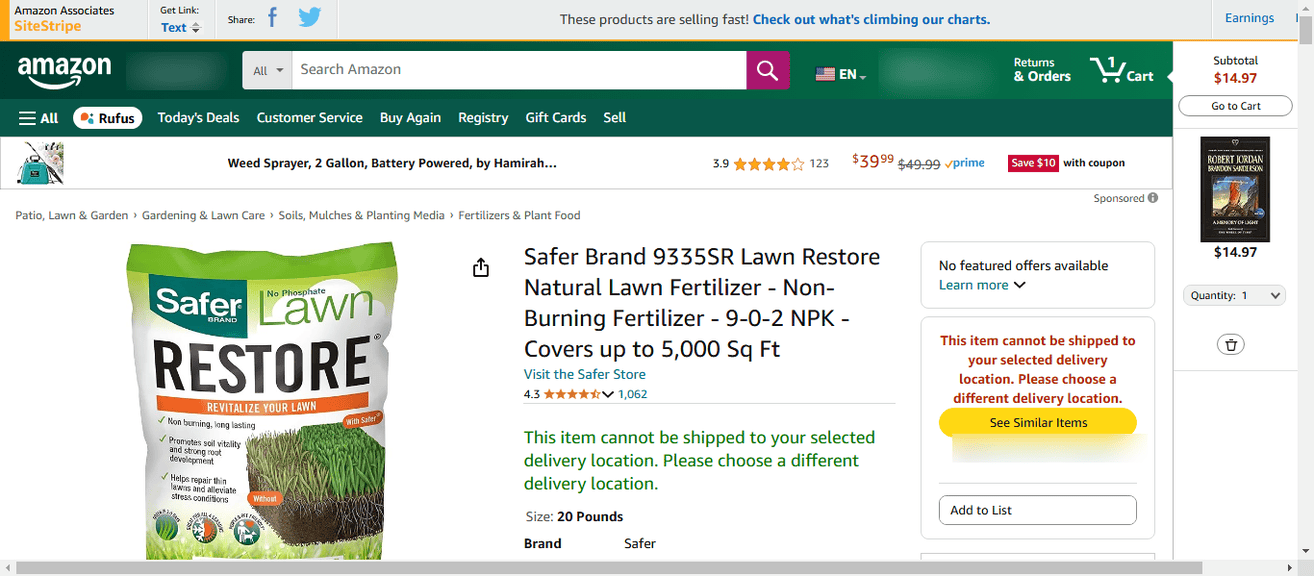
This 9-0-2 fertilizer is safe for pets and children on the lawn. Its naturally derived formula revitalizes the turn by strengthening the roots’ ability to withstand environmental stress.
The fertilizer isn’t ideal for late summer or fall applications and shouldn’t be used on phosphorus-deficient soils.
4. Scotts Turf Builder
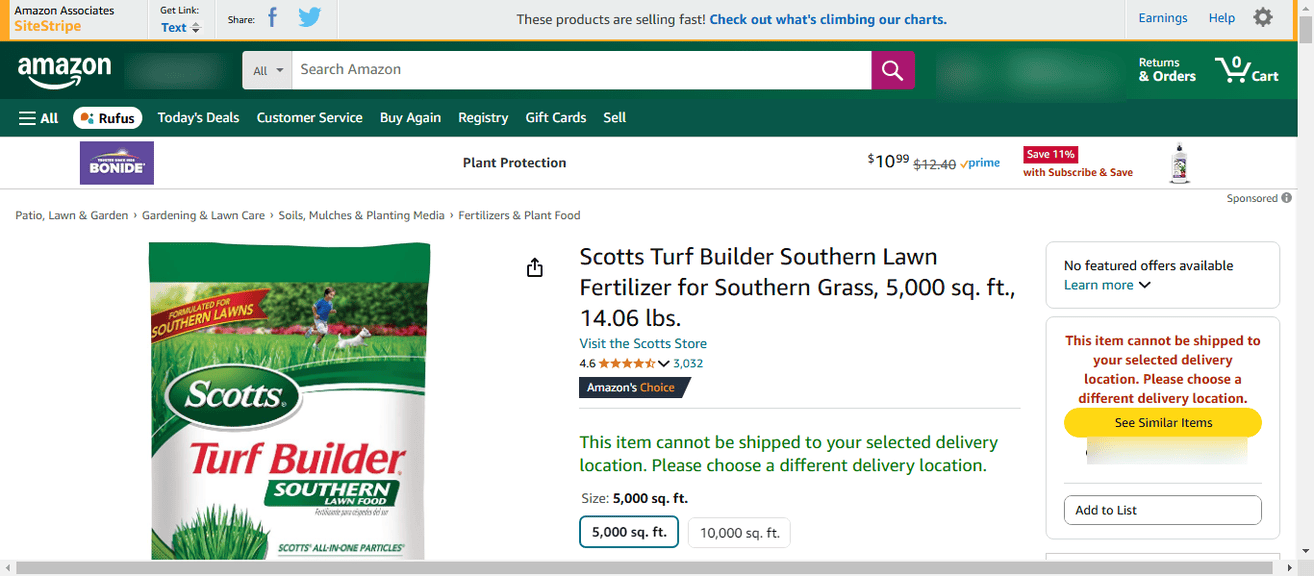
The Scotts Turf Builder is specially formulated for southern grasses and is best applied to wet or dry lawns in the middle of the growing season.
This granular, slow-release fertilizer has an NKP ratio of 32-0-10 and boosts the immune system of your centipede grass lawn while protecting against insect damage.
Maintenance Tips for Centipede Grass Lawns
Here are some extra maintenance tips to help keep your centipede grass lawn healthy and resilient to weeds and pests:
- Avoid over-fertilizing your centipede lawns to keep the turf from becoming susceptible to damage in winter conditions.
- Use phosphorus-free fertilizers to keep the iron in the centipede grass from leeching away and causing pollution from runoff.
- As one of the most essential nutrients needed to maintain a lush centipede grass lawn, iron supplements may be required to boost your centipede grass’ green hue even through the winter.
Care for and Beautify Your Lawn
A soil test is the first step to achieving the lush yard you’re proud of. After identifying potential nutritional deficiencies, you can apply your fertilizer appropriately to the centipede grass lawn.
If you’re considering other warm-season grass types, buffalograss, bahiagrass, bermudagrass, and zoysiagrass can be decent alternatives.
Don’t let the complexities of finding the right fertilizer regime for your centipede grass lawn keep you from freeing up more time for important tasks or enjoying a beautiful landscape.
Get a quote from the landscaping experts at SunCo Lawns and enjoy the unique benefits of our lawn fertilizer programs.
Frequently Asked Questions
What Turns Centipede Grass Yellow?
If you’re seeing more yellow in your centipede grass, it’s a sign of a lack of iron or too much phosphorus concentration in the soil. Centipede grass has a green hue, typically lighter than most other turfgrasses.
How Do You Rejuvenate Centipede Grass?
To reinvigorate your centipede grass lawn, you must first conduct a soil test to determine nutrient levels, pH, and possible deficiencies. Then, based on the soil test results, apply fertilizers, dethatch, fertilize correctly, aerate, mow, and regularly monitor for pests and weeds.
Why Should You Dethatch Your Centipede Grass Lawn?
Dethatching is essential to proper soil aeration and grass health. The decaying organic matter of overmature and dead grass blocks the flow of air, water, and nutrients to the roots. Dethatching also lets fertilizers reach the soil more effectively, resulting in a lush and resilient lawn.