

Key Takeaways
- Landscape fabric offers short-term weed control but can harm long-term soil health.
- Types include woven, non-woven, spun, and perforated, each with specific uses.
- Fabric controls weeds, prevents erosion, but may impede plant nutrition over time.
- Expert landscaping advice ensures sustainable, long-term solutions over temporary fabric barriers.
Commercial landscape fabric or weed barrier fabric has become an effective way for gardeners and some businesses to eliminate weeds and pests.
However, it’s only a short-term solution for these landscaping concerns and may harm your plant and soil’s health over time.
Considering the longevity and cost of using landscape fabric in the long run, you may want to avoid using this material on your property.
Instead, you may opt for other natural alternatives, like a Traditional Six-Step Fertilization Program and Natural Aeration, which prevents and kills weeds while nourishing your lawn and landscapes through all four seasons.
The choice is completely up to you, depending on your business and landscape needs.
Check out this guide to learn more about commercial landscaping fabric.
The Different Types of Commercial Landscaping Fabrics
Using the right type of landscape fabric can help you maximize its effectiveness and your purpose:
Woven
Made of interwoven linen or polypropylene fibers, woven landscape fabric is a popular choice thanks to its durability and affordability.
The holes between the fibers are small enough to prevent weeds from sprouting and big enough for the plants to absorb water and nutrients.
Some brands incorporate UV resistance into the fabric, while others treat the fabric with UV stabilization, which enable the fabric to withstand heat for a longer period and increase its lifespan.
It’s best used around trees and shrubs, but it can also be used in flower beds if you rarely change your plants.
Non-Woven
A non-woven landscape fabric is made of polyester or polypropylene without holes and prevents water, nutrients, and other materials from passing through.
This geotextile fabric is cheap, lightweight, and is an excellent choice for landscapes using gravel and rocks since they stop weeds from growing on stone-covered beds and gravel walkways.
Consider using this underneath large landscaping elements.
Spun
Spun fabric includes layers of bonded polyester fibers, making it durable and difficult to tear.
Its thinner versions allow water and air to pass through but serve as an effective barrier against weeds, insects, pests, and invasive grasses.
Meanwhile, the thicker fabrics can’t be permeated and are often used to control irrigation drainage and protect retaining walls from invasive roots.
Perforated
Perforated fabric is a lightweight material with pre-cut holes, making it easy to put over your plants.
Since it’s so lightweight, it won’t kill your plant’s roots, but it can’t endure heavy foot traffic.
Consider this type of landscape fabric for garden beds or simple yards.
Where Can You Buy Commercial Landscape Fabrics?
You can buy a landscape fabric or weed barrier at most gardening and landscaping supply stores and even online at specialty stores. The fabric comes in rolls and ranges from 50 feet to 450 feet in length.
When you check Amazon, you can find landscape fabrics ranging from $5.99 to $525.99. The products include economy-grade to heavy-duty landscape fabric.
Make sure to research first and compare various brands and types of commercial weed barrier sheets, as well as reviews and prices, before choosing the one that’s right for your business property.
How to Use a Commercial Landscape Fabric
If you want to install a commercial landscape fabric on your own, follow this step-by-step guide.
- Prepare your ground by removing all the vegetation and existing weeds and flattening the soil. This prevents any damage to your landscape fabric.
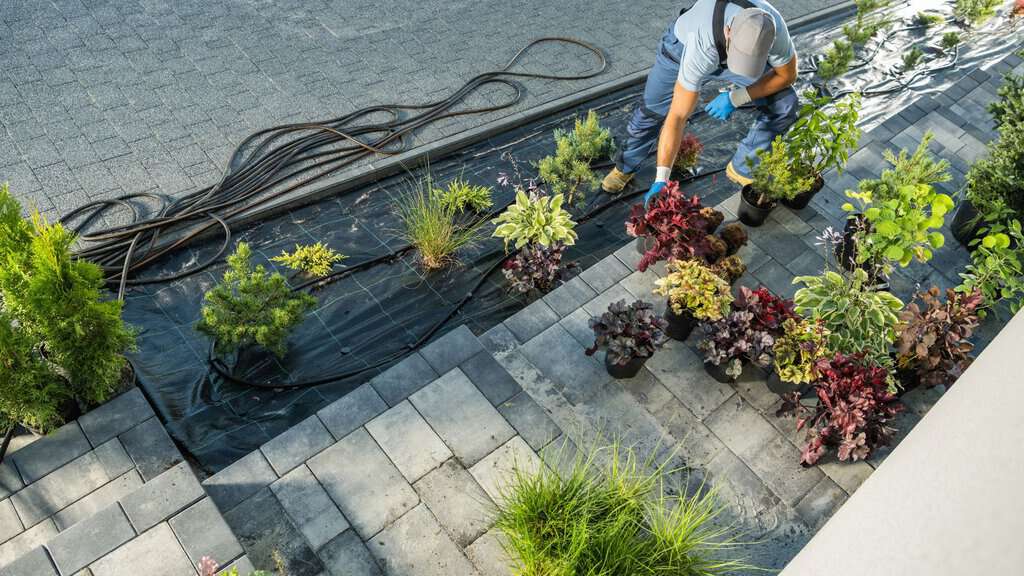
- Lay the landscape fabric over the soil or area you want to cover. You can put it around trees, bushes, and shrubs. You can overlap the fabrics up to six inches if you need more than one row. Don’t forget to place it with the proper side facing up, according to your fabric’s instructions.
- Secure the fabric with staples every 10 feet along the seams and edges. Make sure to overlap and secure the edges of the ground cover fabric to prevent the material and unwanted sprouts from going through the seams. Trim the edges if needed.
- If you’re adding plants, cut an X-shaped incision through the fabric big enough to insert each plant. Cover the soil with the fabric flaps to protect it.
- If you want to enhance the look of your garden or landscape, add a material, like mulch, gravel, sand, or pebbles, on top of the fabric. Up to two inches of covering is enough.
The Pros of Using a Commercial Landscape Fabric
Some gardeners and businesses prefer using a landscape fabric on their property because it:
Controls Weed Growth
Landscape fabric is an easy and quick way to prevent weed seeds from germinating and sprouting on different landscapes.
It’s also a natural way to do it since you don’t need chemicals to eliminate them.
Regulates Soil Temperature
Some use plastic tarps as ground cover, which traps heat in the soil and can damage your plants.
Plastic also traps water below the lining, preventing it from evaporating.
This could also kill your plant, especially if the water freezes due to extremely cold temperatures.
Using a breathable landscape fabric enables the soil to receive better air circulation, releasing heat and cold.
Prevents Soil Erosion
A piece of landscape fabric also acts as a barrier to prevent soil from being washed away when watering.
It also makes the soil more compact, especially if it’s a heavy-duty landscape fabric, so it’s best used on raised garden beds or slopes.
Organizes Your Garden
You can use the landscape fabric to give enough space for each plant to grow and organize them in a grid pattern or according to your preference.
After organizing your plants, you can add mulch, pebbles, or other materials to make your garden or landscape more aesthetically pleasing.
The Cons of Using a Commercial Landscape Fabric
Consider the following downsides of using landscape fabric for your commercial property:
It eventually Affects Plant Nutrition
Although landscape fabric lets plants absorb water and other nutrients, you can still end up with unhealthy soil that affects your plants’ health.
According to the University of Florida, soil particles and decomposed mulch can clog the spaces between the fabric over time and prevent nutrients from reaching your plants, resulting in unhealthy soil and dying plants.
The institution recommends using landscape fabric under mulched paths or areas without ornamental plants where a ground cover is needed.
It Can Be Time-Consuming
Installing landscape fabric or weed barrier on your own or with the help of a professional can be time-consuming, especially if you already have an existing garden or landscape.
It takes time and labor to dig out all the plants, weeds, and other vegetation in your landscape, flatten the soil, and lay your landscape fabric, especially if you have a huge lawn or property.
The Material Is Expensive
Landscaping fabric can get expensive depending on its thickness and the size of your area.
You may also need to buy the necessary tools and organic mulch, like mulched leaves or grass clippings, to cover the fabric, adding to your expenses.
It’s also important to note that even heavy-duty landscape fabric isn’t built for longevity, so you may need to replace your landscape fabric annually or every few years, depending on your landscape or fabric’s condition.
It’s Not a Permanent Weed Control Solution
Commercial weed barrier fabric offers a quick solution to stopping weeds, but eventually, weed seeds can blow into the landscape beds or sprout in the mulch on top of the fabric.
The landscape fabric can also wear down over time, enabling the weed to sneak through the gaps and infiltrate your area.
A tailored commercial landscape maintenance plan may be a more effective solution to get rid of unwanted sprouts in the long run.
Get Expert Advice on Your Landscaping Needs
Weeds and pests are a common concern for small and large businesses with lawns, gardens, and landscapes, resulting in extra costs and stress.
Fortunately, natural weed control and prevention tools may offer a quick and easy solution to unwanted sprouts.
If you want to learn more, contact SunCo’s outdoor specialists to explore your options and find the best solution for your property.