

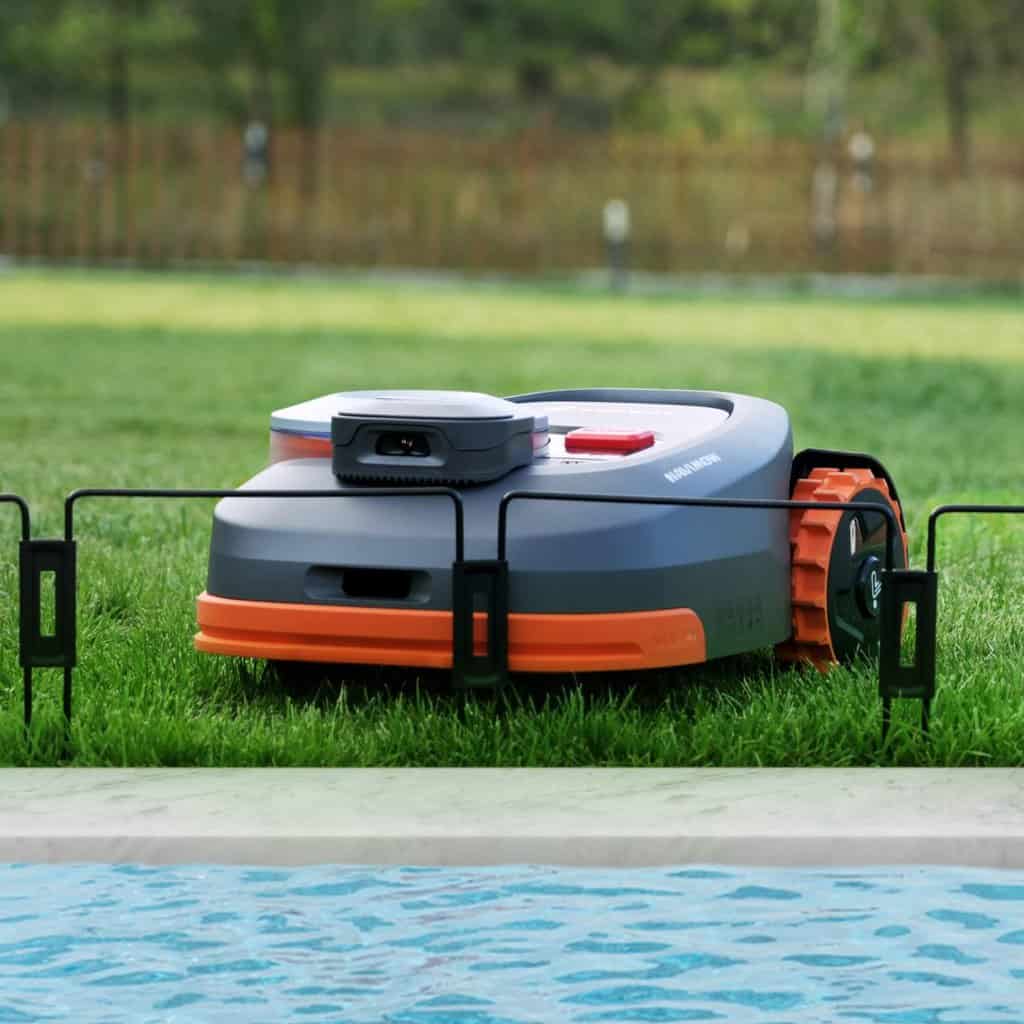
How Robotic Mowers Work
A robotic lawn mower is an autonomous machine that cuts your grass on a schedule without human intervention. It lives on a charging station in your yard, follows a programmed boundary map, and mows in systematic or random patterns depending on the model. When the battery runs low, it returns to dock, recharges, and resumes where it left off.
Modern robotic mowers cut using a spinning disc with small pivoting blades. They cut a thin sliver of grass on each pass (typically one-eighth of an inch) and leave the micro-clippings on the lawn as natural fertilizer. Because they mow frequently (daily or every other day), the lawn always looks freshly cut without visible clippings.
Navigation Technology
The single biggest differentiator between robotic mowers is how they know where your lawn is. There are three main approaches in 2026.
Boundary wire systems require burying a wire around the perimeter of your lawn. The mower uses this wire as an electronic fence. Husqvarna’s traditional Automower line uses this approach. Reliable but installation takes 2 to 4 hours and the wire can break.
RTK GPS (Real-Time Kinematic) uses satellite positioning with centimeter-level accuracy. An antenna placed in your yard provides the correction signal. Segway Navimow and Mammotion LUBA use RTK. No wire burial needed. Setup takes 30 to 60 minutes. Can lose signal under heavy tree canopy.
LiDAR and camera vision systems map your yard using laser scanning and AI cameras. These are the newest technology and don’t need wires or antennas. Segway’s i2 LiDAR and Roborock’s RockMow use this approach. Best for yards with heavy tree cover where GPS signal is weak.
What They Cost
| Category | Price Range | Lawn Size | Examples |
|---|---|---|---|
| Budget | $600 to $1,000 | Up to 0.15 acre | Husqvarna 115H, Worx Landroid |
| Mid-range | $1,000 to $1,800 | 0.15 to 0.5 acre | Segway Navimow i-Series, Eufy E18 |
| Premium | $1,800 to $3,000 | 0.5 to 1.5 acres | Segway Navimow X4, Mammotion LUBA 3 |
| Commercial | $3,000+ | 1.5+ acres | Husqvarna CEORA, Segway Terranox |
Are They Worth It?
In our experience managing lawns in Omaha since 1991, robotic mowers make financial sense when you compare them to ongoing lawn service costs. A professional mowing service runs $40 to $80 per visit, or roughly $1,200 to $2,400 per season. A mid-range robotic mower pays for itself in one to two seasons. The lawn also looks better because it’s cut daily rather than weekly.
The trade-off is setup time and troubleshooting. You’ll spend 30 to 60 minutes mapping your yard initially, and occasional stuck situations require walking out to rescue the mower. Newer models with AI vision have largely solved the obstacle avoidance problem, but curb detection on parking strips remains imperfect on most brands.
What to Look for When Buying
Match the mower to your yard. A quarter-acre flat suburban lot doesn’t need AWD or RTK. A half-acre property with slopes, trees, and multiple zones needs premium navigation and traction. The most common buyer mistake is over-buying for a simple lawn or under-buying for a complex one.
Key specs to compare: coverage area (in acres, not square meters), slope handling (in degrees or percent), navigation type (wire, RTK, LiDAR, or vision), cut width, noise level (under 60 dB allows nighttime mowing), and app quality. The app matters more than you’d expect because you interact with it weekly for scheduling, zone management, and troubleshooting.