
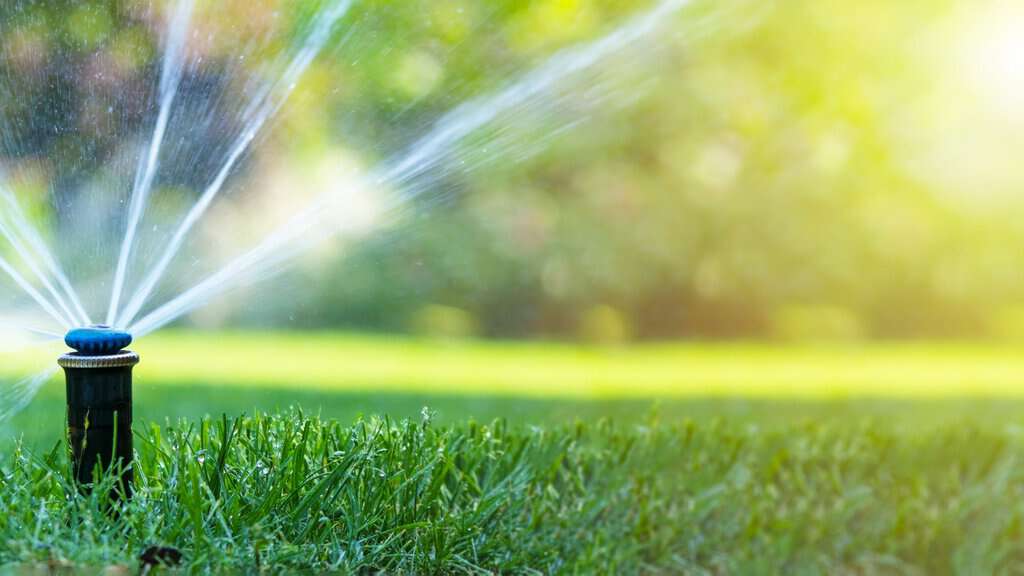


A healthy lawn starts with proper watering, which should usually be done between 5 am and 9 am. But timing isn’t everything.
Too much water and you have fungal infections, weak roots, and unnecessary water waste. Too little water means dying or dead plants in any season.
This is why knowing when, how long, and how often to water grass is crucial to lawn maintenance.
In this post, we’ll break down everything you need to know to water your grass so it stays green, including watering tips to keep your lawn healthy and encourage deep root growth.
Key Takeaways
- Water grass between 5–9 am to reduce evaporation and prevent fungal growth.
- Aim for 1–1.5 inches of water weekly using deep, infrequent sessions.
- Adjust watering based on soil type, grass variety, and recent weather.
- Use tools like sprinklers or drip irrigation for efficient, even watering.
What Is the Best Time to Water Your Grass?
The best time to water your grass is early in the morning, specifically between 5 am and 9 am.
Watering at this time is optimal because cooler temperatures minimize evaporation, calmer winds distribute water more evenly, and it allows grass blades enough time to dry, lowering the risk of fungal diseases.
If early morning watering isn’t practical, early evening around 6 pm is your next best option.
In this case, using a drip irrigation system is recommended to apply water directly to the grassroots, avoiding excess moisture on the blades and preventing disease buildup.
How Long Should You Water Your Grass?
You should water your grass for about 30 minutes per session, delivering roughly half an inch of water each time.
Most lawns require between 1 and 1.5 inches of water per week, meaning two to three sessions of about 30 minutes each will typically suffice.
To determine the exact timing for your lawn, try the tuna can test:
- Place a few shallow containers, such as empty tuna cans, around your yard.
- Run your sprinklers for 30 minutes.
Measure the depth of water collected. Half an inch indicates ideal timing, less means you should water longer, and more means you can water less.
Newly seeded or sodded lawns require more frequent watering to maintain consistent moisture in the top 1.5 inches of soil, aiding proper root growth and preventing seed displacement.
Read more: How long to water grass for
Why Does Timing Matter When It Comes to Watering Grass?
Here are three reasons why timing is important when it comes to watering grass:
1. Low Evaporation
Watering during the heat of the day, especially between 10 am and 4 pm, means much of the water will evaporate before it reaches the grassroots.
This wastes your water and leaves your grass looking yellow and dry.
Early morning watering, in contrast, will help grass absorb more water because of the cooler temperature and calmer winds.
2. Reduced Fungal Growth
While you can water grass overnight when you’ve come back from work, having wet grass for a longer period will create the perfect environment for fungal diseases.
That’s because when moisture lingers, it encourages the growth of fungi, which appear like brown patches and melting-out leaves.
3. Deep Root Growth
Your grass’ roots should grow downward and spread out to anchor it well.
If you water too much or when evaporation is low, your roots won’t go as far searching for moisture in the ground.
This means you’ll have a weak root structure without much drought tolerance.
5 Tips for Watering Your Grass
Keeping your lawn lush and green requires proper watering techniques. Here are five practical tips to make sure your grass stays healthy:
1. Water Deeply, Not Frequently
Rather than watering your lawn lightly every day, aim for deeper, infrequent watering sessions.
A good routine is around 30 minutes every two to three days.
This encourages the roots to grow deeper into the soil, creating a stronger, drought-resistant lawn.
It also helps prevent issues like overwatering and turf diseases.
2. Use the Right Equipment
The tools you use significantly influence how effectively your lawn absorbs water.
Here are a few options to consider based on your lawn size and landscaping:
- Sprinklers: For small lawns, oscillating sprinklers provide even coverage. For larger lawns, rotary sprinklers distribute water in a broader, circular pattern.
- Drip Irrigation: Perfect for garden beds, trees, or areas where sprinklers waste water, this system targets water directly to the roots.
- Adjustable Hose Nozzle: If watering by hand, use an adjustable nozzle to control water pressure and prevent either flooding or inadequate watering.
3. Adjust Based on Soil Type
Different soil types absorb and retain water differently, so you need to know your soil type to water it correctly. Here’s how soil types behave on average:
- Clay soil . It holds water well but drains slowly. You should water for shorter periods (15-20 minutes) but more frequently to avoid runoff and pooling.
- Sandy soil . It drains quickly, so you should water for longer periods (up to 40 minutes) to ensure moisture reaches the roots.
- Loamy soil . It retains moisture without pooling and drains efficiently. You can stick to the standard 30-minute sessions for this soil type.
4. Consider Your Grass Type
Your grass type will also impact how much and how often you should water.
Cool-season grasses like Kentucky bluegrass, fall fescue, and ryegrass require 1-1.5 inches of water per week, with increased watering in summer to prevent dormancy.
Warm-season grasses like Bermudagrass, Centipede grass, Zoysia, and St. Augustine need less water—about 0.5-1 inch per week—but may still require extra watering during long dry spells.
5. Use Weather as a Guide
Your water conditions should also guide your watering schedule.
If you’ve had heavy rain, you can reduce or skip watering for a few days.
You may also have to water less during spring and fall because of the cooler temperatures and increased rainfall.
Use a rain gauge to figure out exactly how much water your lawn is getting.
During summer heatwaves, you will need to water your grass more, especially if you have cool-season grasses.
You can test your soil moisture to get a feel of how much watering you need to do.
An easy way to do this is to use a screwdriver.
If it’s easy to push it 6-8 inches into the soil, your lawn has enough moisture. But if it’s difficult to do that, your grass needs more water.
Make Watering Your Grass Easy With SunCo Lawns
A healthy lawn requires watering in the right way and at the right time. You can’t just throw water on your grass and expect it to look green and vibrant the next day.
Lawn maintenance in general requires care, a lot of patience, and a little bit of science. This is where we come in.
At SunCo Lawns, we help busy home and commercial lawn owners keep their grass looking green year-round.
We understand the Midwest weather, what grass types work here, and how to work the soil to get you the best results.
Want to make sure your lawn looks the best on the block? Give us a call today!