

Key Takeaways
- Weeds compete with flowers for nutrients, space, and water, weakening your garden.
- Organic options like mulch, fabric barriers, and hand-pulling control weeds gently.
- Homemade or natural weed killers, like vinegar sprays, offer eco-friendly alternatives.
- Pre- and post-emergent weed killers target weed growth at different stages effectively.
Handling weed seeds among your flower beds requires careful measures. You don’t want to reach right for the weed killer, but instead try gentler solutions to control weeds.
If you must use a chemical, you might want to consider natural weed killers that halt or eliminate weed germination without hurting your flowers.
This guide will present the best solutions for controlling weeds in your flower garden so you can get back to enjoying your colorful blooms instead of weeds.
And if you don’t know what you’re contending with, our team at SunCo can help you identify the weeds that have wreaked havoc on your flower bed and prescribe the most ideal solution if you’re having a hard time deciding.
The Risks of Weeds in Flower Beds
Weed growth can destroy your flower beds in more ways than one. Take a look at why it’s unwise to ignore weeds if you’ve got ’em.
Detract from the Beauty of Your Flowers
Many weeds look like flowers, but they aren’t. Plucking or pulling them by their flower heads will only allow weed seeds to spread.
Before you know it, your lovingly planted flower beds have been entirely outshined by unappealing young weeds.
Impede Flower Growth
Here’s another reason that will make you want to stop weeds. They can dominate all the resources your flowers need to grow healthy and strong.
Weeds can take up space, leaving your flowers with none. They will thirstily suck up resources like water and fertilizer, providing your flowers with less.
All in all, you might end up with weaker, sadder flowers that don’t bloom as often before petering out, and all because of weeds.
Leave Little Room for Desirable Plants
Gardening enthusiasts know that a successful flower garden isn’t only about the blooms themselves, but also the accompanying plants grown with them.
These plants can bring out the appeal of the flowers or create contrasting textures.
However, just like weeds leave little room for flowers to grow, the same is true of the desirable plants you want, from vegetable gardens to ornamental grasses.
Grow Out of Control
A weed here or there in your flower bed might not seem like much of a problem at first. However, blink and you’ll miss how fast weeds can take over, leaving you with no space on the soil surface.
You’ll begin looking up methods to kill weeds immediately.
Weed Removal and Treatment Options for Flower Beds
Remember, the key to treating weeds in flower beds is to go for a gentle approach. You only want to kill weeds in flower beds, not harm the flowers themselves.
The following recommendations will prevent weed growth and kill existing weeds, leaving you with a fresher flower bed once again.
Landscape Fabric
Your first solution is more in the vein of weed control.
Using landscaping fabric as a weed barrier will not kill them. However, you can prevent weeds from popping up.
For that reason, we only recommend this method after you’ve found a solution for getting those existing weeds under control. Maybe you pull them, or perhaps you use a weed killer.
Landscaping fabric either uses synthetic or organic materials. Both have their advantages, as organic fabrics will naturally biodegrade over time.
Synthetic fabrics, though, can last for seemingly ever, but they don’t break down as easily, which doesn’t do the environment any favors.
However, fabric is only the start when it comes to selecting a weed barrier like landscaping fabric. Here are some other considerations to keep in mind:
- Filtration abilities: Do you use a French drain or another means of water filtration? Double-check that your landscaping fabric is filtration-friendly.
- Quality: Commercial grade landscape fabrics are the highest-rated if you want a solution that will last for years.
- Permeability: Some types of weed barriers are more permeable than others. This can starve weeds of water and sunlight or allow some of these resources through.
- UV protection: Landscape fabrics may include UV protection to preserve the fabric for longer so you can rely on it over many seasons.
The best part about landscape fabric is it couldn’t be any easier to use to prevent weeds.
Measure the length and width of your yard that has become overrun with weeds. Purchase landscape fabric and cut it down to size.
Cover the affected area and affix the fabric to your landscaping.
Check the fabric every week or so to ensure it hasn’t moved from wind or begun fading or deteriorating. If yours is worse for wear, replace it.
Pulling Weeds
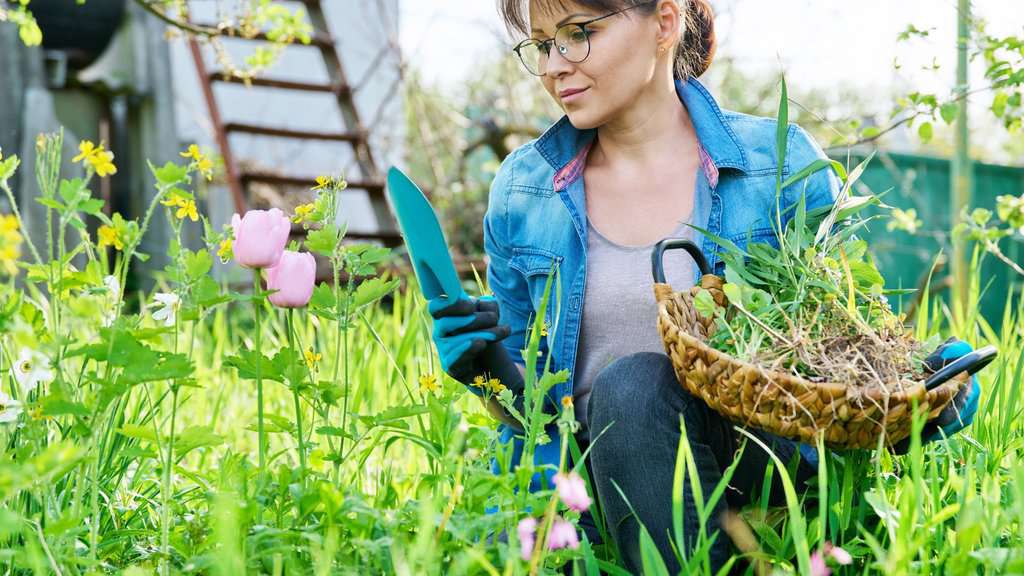
If you want to get right to the methods that stop weeds, you can always pull weeds.
While you might get the itch to pull all the weeds in your backyard, that’s not always attainable. You can only realistically yank weeds that lack extensive root systems.
The deeper into the ground they’ve gotten, the more you’re better off applying selective herbicides or another weed killer for weed prevention.
If you insist on removing weeds by hand, use a garden knife to dig into the soil around the weed.
Then, grab a goose-neck hoe or a weeding fork to enable your hand pulling. Grip the weed from the base, not the top, as you can end up spreading weed seeds that way.
This is a useful method to prevent weeds, as once you pull them out, they’re gone. However, that’s not to say they can’t grow back again in that same spot or others.
Mulch
Just as you can’t kill emerging weeds with a barrier but it’s still effective, that also goes for a mulch layer.
Mulch lets you strategically cover weeds without impacting nearby plants. You can also customize your ground covers however you like.
What do we mean by that? There are all sorts of mulch options out there. They all work about the same, serving the unifying purpose of stopping weeds. The difference comes down to aesthetics, availability, and budget.
Pebbles or gravel
Weeds certainly won’t be able to get through a layer of pebble mulch. However, neither will other plants thanks to this effective physical barrier.
Rubber
Recycled rubber mulch doesn’t break down for a long time, meaning you can contend with your weed problem effectively for longer with this material.
Hay or straw
Efficient and easy to apply, hay or straw comes in bales and other forms so it doesn’t blow away.
A thick layer will prevent germination since weeds won’t be able to get enough of the resources they need.
Wood chips
You’ll see fewer new seeds emerge when you apply wood chip mulch. Besides chips, you can also buy or make wood-based mulch in chunks or thinner, finer pieces.
Compost
Taking a DIY approach to mulch is just as effective for your garden as any other kind.
You can create an effective barrier that inhibits weed growth with grass clippings and hay as your base.
Weed Killers
Lastly, let’s talk about how to kill established plants and weeds that have wrecked your flower beds. That’s right. It’s time to discuss weed killers.
As the most effective way to remove weeds, chemicals will get the job done.
However, you might want a more natural option before you reach for the systemic herbicide. One of the simplest natural recipes you can make is this:
- One tablespoon of mild liquid dishwashing liquid
- One cup of salt
- One gallon of white vinegar
Mix the ingredients, transfer them to a spray bottle, and generously coat the weeds.
The surfactant in the dish soap combined with the acetic acid from the white vinegar will linger on the plant and cause its demise.
If you’d rather reach for the chemicals, you’ve got to know what you’re using. Here’s an overview:
- Selective weed killer: A selective weed killer is only recommended for certain weed types or categories. It can still be minimally effective on other types of weeds, but it’s best on the ones it’s suggested for.
- Non-selective weed killer: Non-selective weed killers can destroy weed plant roots of all kinds, including unwanted flowering weeds, grasses, and tough-to-kill broadleaf weeds.
- Pre-emergent weed killer: A pre-emergent herbicide requires application before weeds grow for the season, so you’ll have to successfully identify the weeds on your lawn to make this product efficient.
- Post-emergent weed killer: You can also use a post-emergent weed killer, which works on weeds that have already grown for the season.
Let SunCo Lead the Way to a Healthier Lawn
Don’t let weeds ruin the beauty of your flower garden. SunCo can help you diagnose and treat weeds of all kinds.
Whether you take a more environmentally friendly approach with mulch or go straight to the weed killer, we can advise you on what’s best to maintain your landscaping.