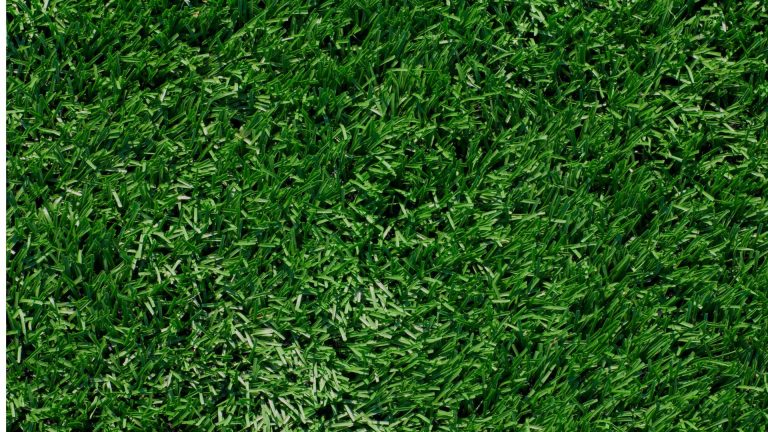



Weeds don’t just make your lawn look messy
They steal water and nutrients from your grass, making it harder for your lawn to thrive.
If left unchecked, they can take over your yard, weakening the soil and crowding out healthy grass.
Here are common kinds of weeds that you’re likely to see in the Midwest, as well as common remedies to eliminate them.
Key Takeaways
- Midwest lawns face 12 aggressive weed types that require prompt identification.
- Best weed control depends on season, growth stage, and correct herbicide use.
- Dense, healthy grass naturally suppresses weed spread and root development.
- Hand-pulling, mulching, and targeted sprays work best for specific weed types.
12 Kinds of Grass Weeds in the Midwest to Look Out For
Here are the most common lawn weeds in the Midwest region.
| Weed | Why it’s harmful | Where it grows | When to remove it | Best method |
|---|---|---|---|---|
| Bindweed | Smothers other plants by wrapping around them and competing for nutrients. | Lawns, gardens, and landscape areas in full sun. | As soon as seedlings emerge; mature vines are harder to eradicate. | Persistent hand-pulling or targeted herbicide application. |
| Broadleaf Plantain | Competes with grass and thrives in poor soil conditions, preventing healthy lawn growth. | Lawns, roadsides, meadows, and compacted soil areas. | Early spring before they seed or late summer. | Hand-pulling (ensure roots are removed) or iron-based herbicides. |
| Canada Thistle | Deep root system makes it difficult to control; quickly takes over lawns and landscapes. | Sunny areas in lawns, gardens, and along roadsides. | Before seed heads mature in mid-summer. | Cutting seed heads, using mulch, or applying broadleaf herbicide. |
| Chickweed | Produces hundreds of seeds quickly, spreading throughout lawns. | Moist soil, sunny and shaded areas in gardens and lawns. | Early spring before it spreads. | Hand-pulling or using a pre-emergent herbicide in early spring. |
| Crabgrass | Competes with lawn grass for nutrients and spreads quickly. | Lawns, gardens, and landscape areas under sun or shade. | Late summer before seeds spread. | Regular mowing, pre-emergent herbicides before germination, or spot treatment with non-selective herbicide. |
| Creeping Charlie | Can overtake lawns and prevent grass from growing. | Shady, moist areas in lawns and gardens. | Early spring before it flowers. | Hand-pulling (including trailing stems), mulching, or using a post-emergent herbicide. |
| Dandelions | Deep roots make them difficult to remove; spread aggressively via airborne seeds. | Lawns, roadsides, and gardens in full sun. | Early spring before they seed. | Hand-pulling (ensure deep roots are removed), overseeding lawn, or using a pre-emergent herbicide. |
| Garlic Mustard | Crowds out native vegetation and spreads rapidly. | Lawns, forests, and roadsides. | Before flowering, ideally in early spring. | Uprooting (removing upper roots), bagging, and disposing. |
| Henbit | Competes with grass for nutrients and spreads quickly. | Lawns, gardens, and along roadsides in sunny and shady areas. | Early spring or fall. | Mulching, reducing lawn moisture, or using a broadleaf herbicide. |
| Lambsquarters | Rapidly spreads, crowding out garden plants. | Lawns, gardens, and cultivated fields. | Early spring before they set seed. | Mulching, pre-emergent herbicide, or hand-pulling. |
| White Clover | Spreads quickly and takes over weak lawns. | Sparse lawns, roadsides, and pastures. | Spring or early summer. | Hand-pulling, overseeding lawn, or herbicides. |
| Yellow Nutsedge | Spreads aggressively through underground tubers; outcompetes lawn grass. | Lawns, gardens, and irrigated areas. | Early summer before tubers form. | Pulling by hand (including tubers) or applying selective herbicide. |
1. Bindweed
The bindweed is a broadleaf perennial that features arrowhead-shaped leaves, twining vines, and white to pale pink flowers that look like morning glories.

This garden weed grows deep and wide in the ground and can reach a height of six feet or more. It can wrap itself around other plants and smother them.
Bindweed is tough to remove, but persistence is key. Herbicides work, but be careful since they can harm nearby plants.
If you’re pulling it by hand, make sure to get a firm grip and remove as much of the root as possible to prevent regrowth.
2. Broadleaf Plantain
The broadleaf plantain is one of the most common broadleaf weeds next to the dandelion.
It features a short and thick tap root system with a rosette of oval-shaped leaves laid flat on the ground.
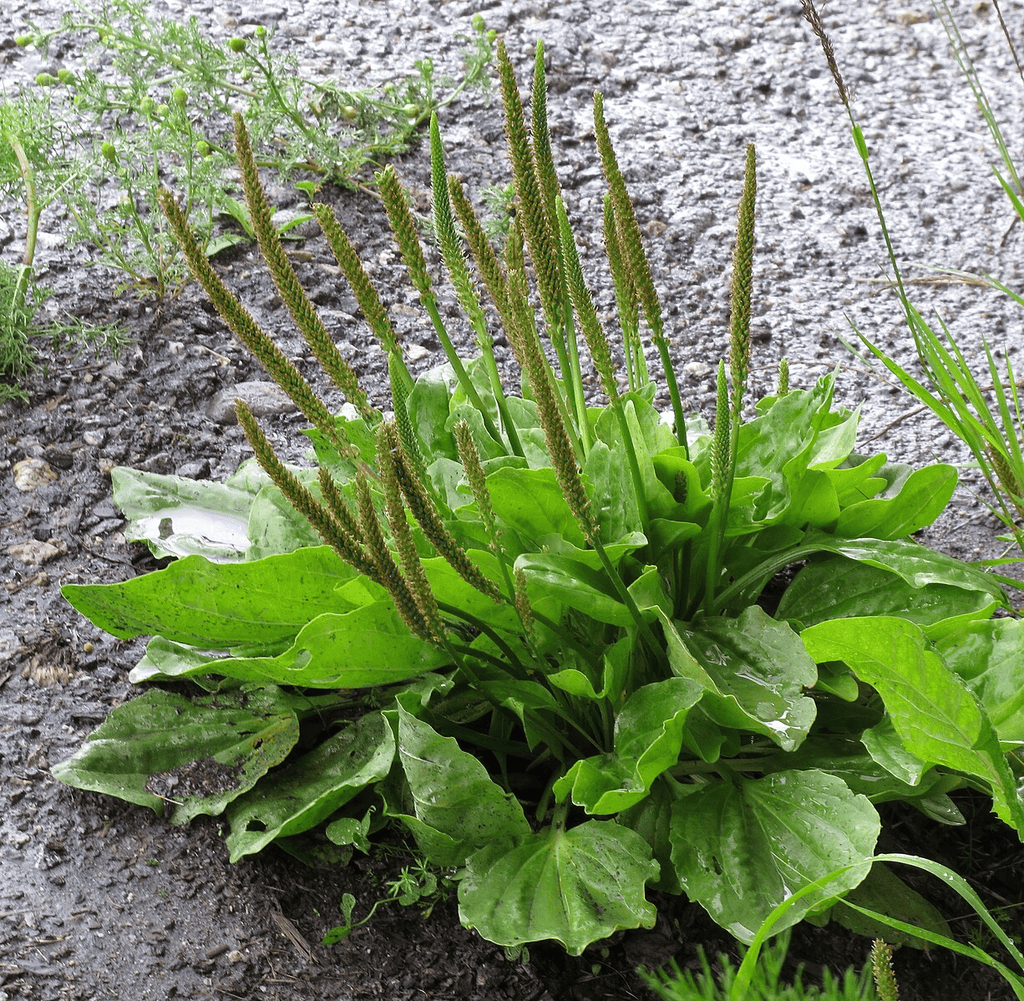
This plant adapts to most conditions, heavy soils, and low mowing height, which allows it to spread easily.
You can see it mostly on lawns, roadsides, pastures, and meadows.
Hand-pulling broadleaf plantain is effective, but only if you get the whole root.
Otherwise, it’ll be back before you know it. For stubborn patches, you can try an iron-based herbicide to keep it from returning.
3. Canada Thistle
The Canada thistle is an invasive broadleaf perennial with spiny gray-green leaves and purple flowers.
It can grow up to six feet tall and up to three feet wide due to its extensive root system.

During mid-summer, the seedheads become white and fluffy and spread across the area.
You can commonly see it in sunny areas.
Canada thistle spreads aggressively, so don’t wait until it takes over your lawn.
Cut seed heads before they mature, and if you’re pulling it out by hand, thick gloves are a must. Those spines are no joke!
You may also use mulch or broadleaf herbicide to prevent it from spreading in landscape areas.
4. Chickweed
The chickweed is a low broadleaf weed with small star-shaped flowers and fuzzy leaves.
It thrives in moist soil under the sun or shade and produces hundreds of seeds, allowing it to spread quickly.
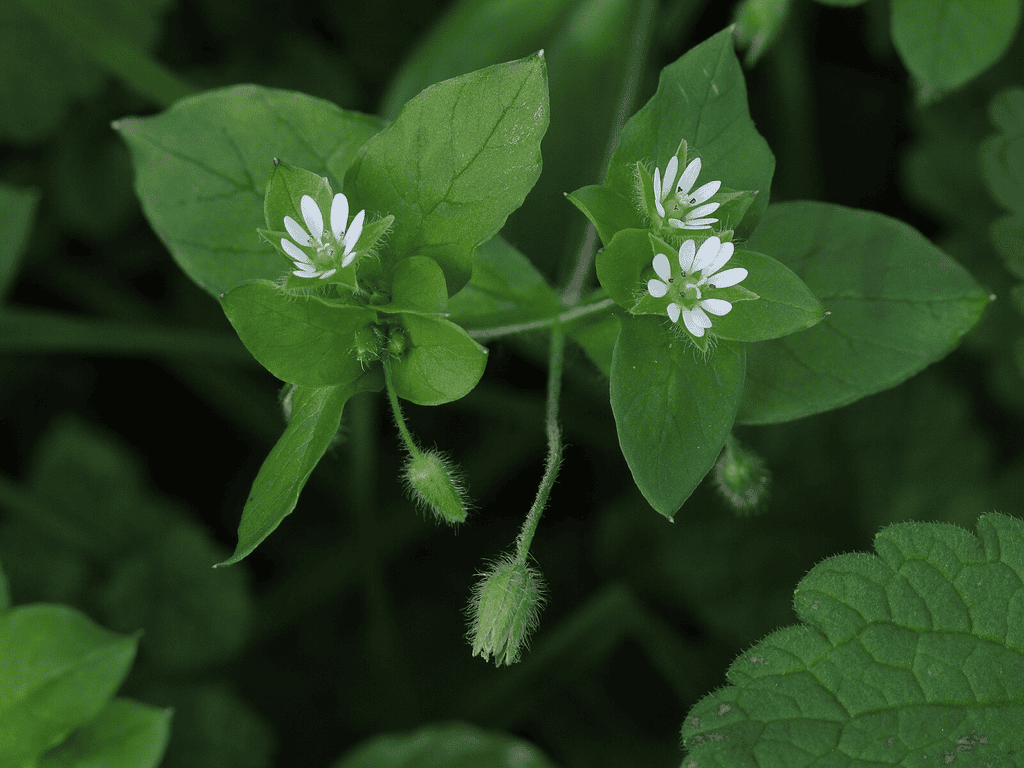
It grows naturally in winter but can survive in warmer climates year-round.
Chickweed may be small but don’t underestimate it. It spreads fast.
Pulling it out works, but because it’s low-growing, it can be tricky to spot.
Make sure you remove the whole plant, roots and all, to keep it from coming back.
You can also use a pre-emergent herbicide in the early spring for better weed control.
5. Crabgrass
Crabgrass is a grassy weed with long finger-like blades that stick out from its central stem.
It usually grows up to 18 inches tall and 20 inches wide on a healthy lawn, garden, or landscape area under the sun or shade.

The best way to stop crabgrass? Don’t let it spread in the first place.
Mowing regularly in late summer helps prevent seeds from taking root, and a pre-emergent herbicide in early spring can keep it from coming back next season.
6. Creeping Charlie
Creeping Charlie, also called ground ivy, features low-lying creeping stems and scalloped leaves that produce purple flowers in late spring.
This perennial plant grows in shady lawn and garden areas and spreads quickly through the nodes on its stems.
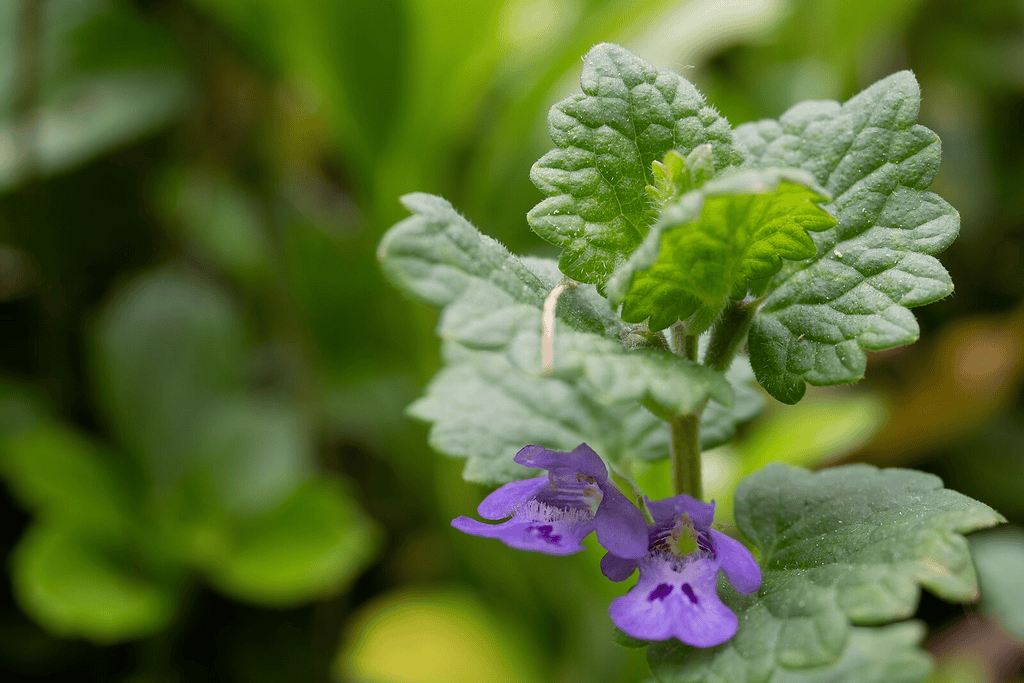
It spreads fast, but you can stop it. Hand-pulling works if you remove every trailing stem but miss one, and it’ll keep coming back.
For tougher infestations, mulch or a post-emergent herbicide can help.
If you prefer a faster solution, consider using a post-emergent herbicide or iron-based weed killer.
7. Dandelions
Dandelions are the most common lawn weeds.
Their bright yellow flowers mature into puffy balls that can easily fly away and spread their seeds in new spaces.
As a result, they’re difficult to control.
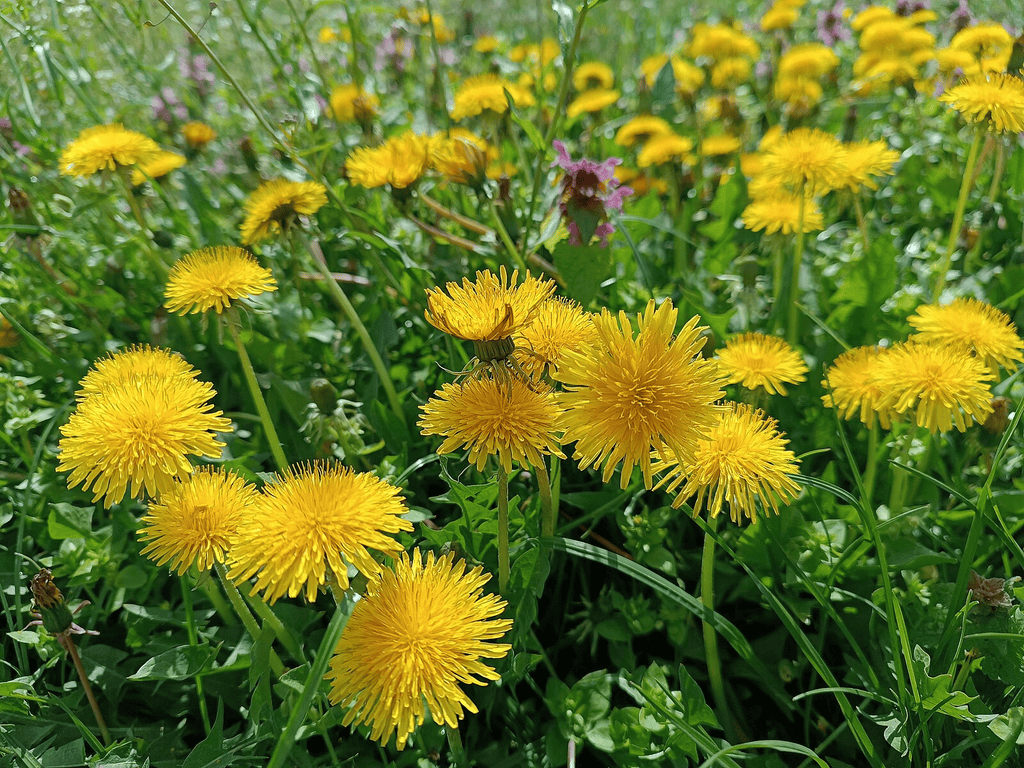
This broadleaf weed grows in sparse lawns and develops deep roots, making it difficult to pull by hand.
Want to stop dandelions before they start? Keep your lawn thick and healthy.
A well-maintained, dense lawn leaves little room for these stubborn weeds to take hold.
8. Garlic Mustard
Garlic mustard is an edible plant that contains antioxidants and vitamins A and C. However, this fast-growing crop can become invasive since it overcrowds other vegetation.

You can identify the garlic mustard with its broad, triangle-shaped, dark green leaves with frilly edges.
When it matures, it features small, four-petaled flowers.
If garlic mustard is taking over your yard, act fast. Uproot it completely before it has a chance to spread.
The best time? Right after rain, when the soil is soft, and removal is easier.
The best way to prevent garlic mustard from spreading is to pull it before it develops seeds.
9. Henbit
The henbit is a common broadleaf weed in the Midwest that invades lawns, roadsides, cultivated fields, and pastures.
Its leaves look round and heart-shaped with scalloped edges. It also produces tubular purple flowers.
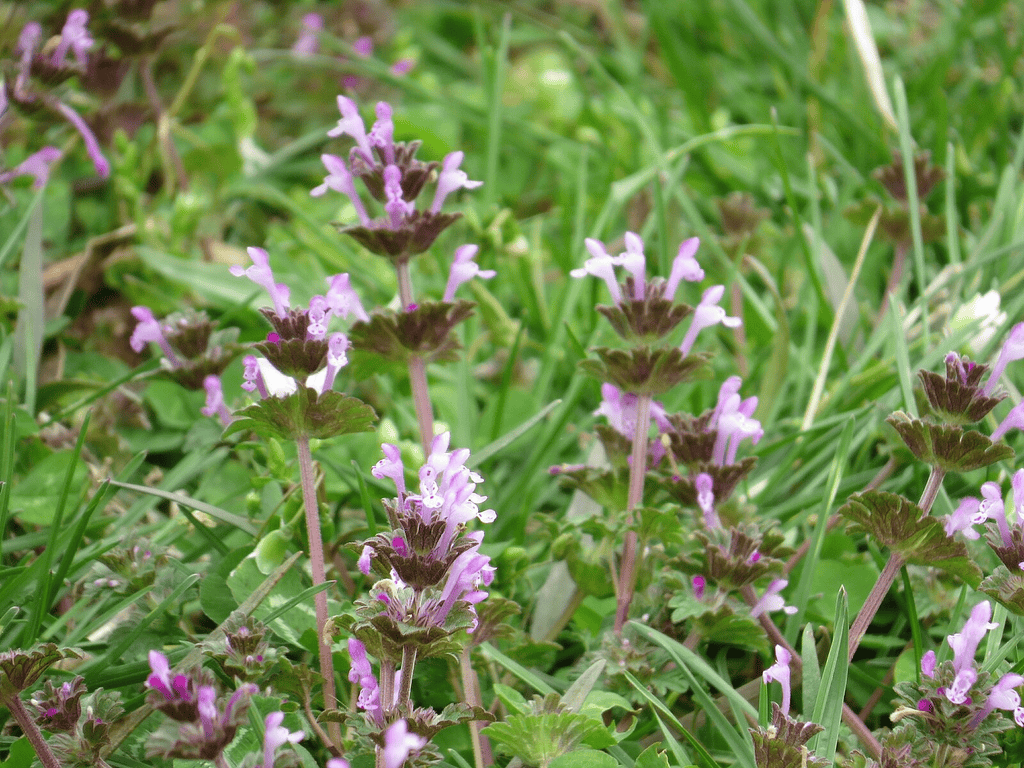
To control this weed, you can place mulch in your garden and water your lawn less since weed seeds germinate when there’s moisture.
Henbit thrives in cool seasons, so timing matters.
If you catch it early, hand-pulling works, but for more stubborn patches, a broadleaf herbicide applied in fall or early spring will do the trick.
10. Lambsquarters
The lambsquarters, also called goosefoot, is another edible broadleaf annual weed.
It’s part of the expansive amaranth family, which includes spinach, chard, and beets.
In fact, this weed tastes similar to spinach and offers nutrients like antioxidants, protein, calcium, and iron.

This plant can become difficult to control if you let it mature and spread, so it’s best to prevent it from spreading early on.
Otherwise, you may use a post-emergent herbicide to get rid of it.
11. White Clover
The white clover is a low-growing perennial that usually grows sparse lawns. It features three tear-shaped leaflets and a white and light-pink globe-shaped flower.
Their leaves also showcase a pale white crescent across the middle. You can also find a red clover with a reddish-pink flower.
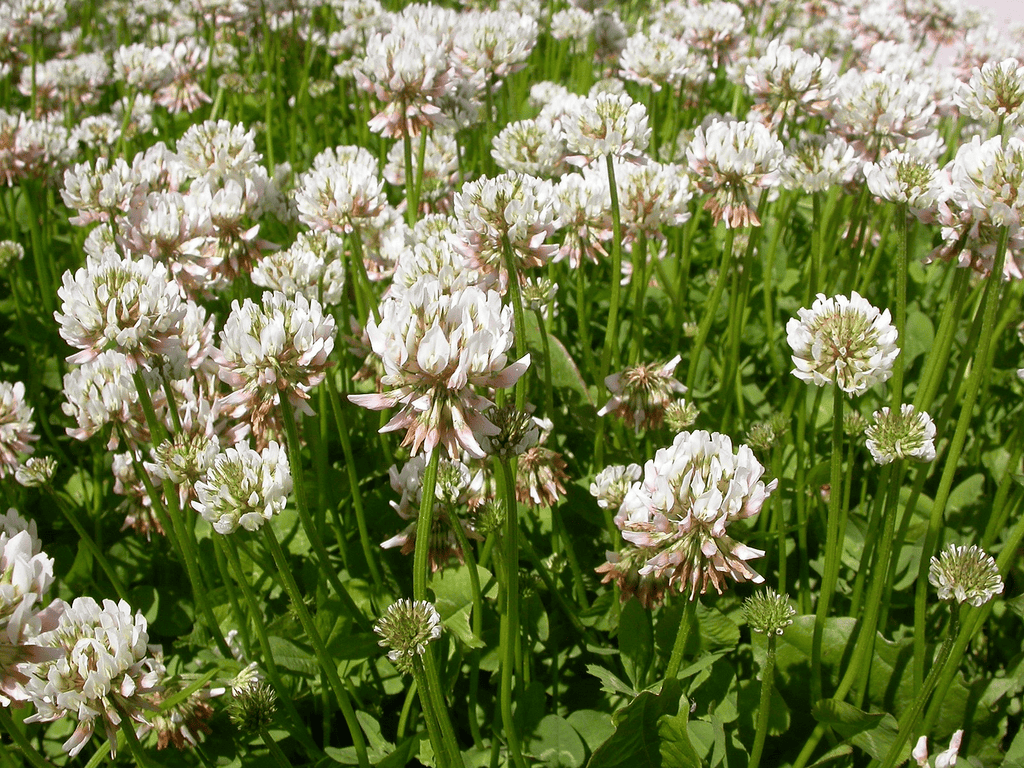
White clover may be a weed, but it’s not all bad; it actually adds nitrogen to the soil.
Still, if you’d rather have a uniform lawn, hand-pulling or herbicides will help keep it in check.
You can’t kill the seeds through heat or solarization, so you will need to apply herbicides.
12. Yellow Nutsedge
The yellow nutsedge, also called watergrass or nutgrass, is a grass-like weed common in Missouri.
It features long, bright green, v-shaped leaf blades and a triangular cross-section.

This garden weed can outgrow lawn grasses and spread rapidly and deeply, especially in well-irrigated areas.
To get rid of this or prevent its growth, improve your irrigation and pull out the weeds. Yellow nutsedge has deep roots, making it tough to remove.
Digging it out completely is key, but for larger infestations, a selective herbicide is often the best long-term solution.
Meanwhile, the nutsedge that has spread in large areas should be treated with herbicides.
Get Comprehensive Weed Control and Lawn Care with SunCo
Dealing with weeds in grass, lawns, and yards can be tedious, especially for large lawns and commercial spaces.
If you can’t handle upkeep on your own, consider hiring a team of professionals to manage weeds and care for your lawn.
SunCo offers comprehensive services, from lawn fertilization and pest control to sprinkler installation and commercial lawn services.
Connect with our team today to learn how we can help!