


Key Takeaways
- Liquid lawn fertilizers work quickly, delivering essential nutrients for lawn restoration.
- Various types (organic, synthetic, slow-release) cater to specific lawn care needs.
- Benefits include quick absorption, even application, and reduced risk of grass burn.
- Best applied during stress periods, seasonal transitions, or after heavy rainfall.
Summer stress, heavy rainfall, thunderstorms, and lack of care strip your lawn of the nutrients it needs to stay lush and green.
So, if your lawn is looking yellow, patchy, or burnt from all the summer heat, you can quickly fix the problem with liquid lawn fertilizers.
Liquid lawn fertilizer works quickly to replenish nutrients where they’re needed most and restore your lawn’s color.
Let’s understand how it works, why it’s effective, and when to use it for the biggest impact.
What Is Liquid Lawn Fertilizer?
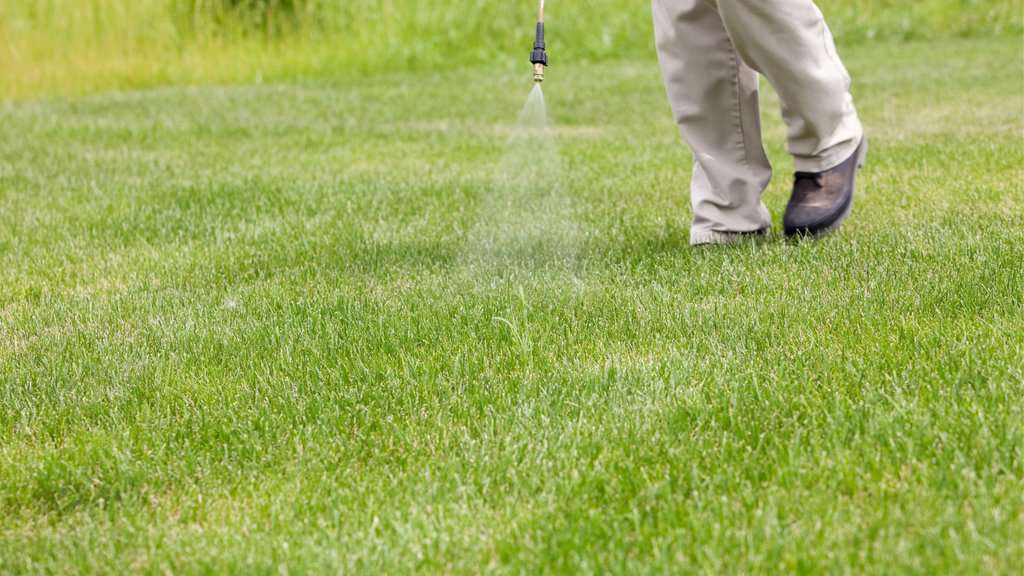
Liquid lawn fertilizers are designed to deliver essential nutrients directly to your lawn as fast as possible. Unlike granular fertilizers that need time to break down, liquid fertilizers are absorbed quickly through the glass blades and soil.
The primary components of these fertilizers are nitrogen (N), phosphorus (P), and potassium (K), altogether known as NPK. There are also other types of liquid lawn fertilizers aside from NPK.
Types of Liquid Lawn Fertilizers
Not all liquid lawn fertilizers are similar. Here are six types you’ll find on store shelves:
1. Organic
These fertilizers are made from organic materials like fish emulsion and manure, which makes them great for those looking to improve soil health over time.
They’re less likely to burn your lawn due to excessive nutrient concentration—a common risk when using granular fertilizers.
Organic fertilizer is also less harmful to the environment, which is why it’s part of our organic hybrid fertilization process.
2. Synthetic
Synthetic fertilizers are manufactured to provide nutrients quickly.
They are helpful for situations such as when you want to address immediate nutrient deficiencies or give your plants a kick before the season begins.
They contain carefully calculated NPK ratios to help you meet specific lawn needs. But while these fertilizers work fast, you also need to be very careful with over-fertilizing, which can cause environmental runoff and lawn damage.
3. Micronutrient Formulas
Micronutrient liquid fertilizers supply plants with less-needed but still required nutrients like:
- Iron: It supports photosynthesis and ensures your plants have a green color.
- Zinc: It helps with enzyme function and plant metabolism.
- Manganese: It increases chlorophyll production and protects against yellowing.
These formulas are used as supplements alongside NPK fertilizers, especially for Midwest lawns that may suffer from mineral deficiencies due to soil composition and environmental factors like storms and freeze-thaw processes.
4. Foliar
Foliar fertilizers are applied directly to the leaves of your lawn instead of the soil and are absorbed through tiny pores called stomata. This bypasses the root system and delivers nutrients directly to the plant’s tissues.
This type of feeding is a great way to take care of nutrient deficiencies, heat stress damage, or poor root function. It can also help if your soil has poor nutrient availability and when fast results are needed.
We think they work best for complementing soil-based feeding, not as a replacement.
5. Slow-Release
Slow-release liquid fertilizers provide your lawn with a steady supply of nutrients over a long period, usually a few weeks. This creates a consistent feeding schedule and reduces the risk of over-fertilization.
You can also use these fertilizers if your lawn is damaged due to heat stress or has started growing new grass. They’re also a great way to keep your lawn looking green and healthy throughout the year.
At SunCo Lawns, slow-release fertilizers are the backbone of our process. We start our year-round lawn care with slow-release fertilizer to make sure your lawn absorbs as many nutrients as possible.
After that, we treat it with more of this fertilizer during the summer, fall, and winter seasons to ensure your lawn maintains its health. This helps your lawn survive harsh summers and freezing winters, which are common in the Midwest.
6. Quick-Release
Quick-release liquid fertilizers are like foliar—they’re designed for fast, noticeable results like rapid growth and vibrant color. This makes them perfect if your lawn is:
- Showing signs of stress like yellowing or slow growth
- At the beginning of the season
- Recovering from the harsh winter
- Needed for an event or gathering
But these fertilizers come with some trade-offs like over-fertilization and short-lived effects compared to slow-release. They also require more frequent applications to ensure and maintain results.
Benefits of Liquid Lawn Fertilizer
Here are five benefits of using liquid lawn fertilizers:
1. Quick Absorption
Liquid fertilizers provide nutrients directly to the grass blades and soil. This ensures quick absorption and means your lawn will start benefiting immediately after application.
2. Easy to Apply
Unlike granular fertilizers, which require even spreading, liquid formulas can be applied with equipment like hose-end sprayers and specialized tanks. This makes them much easier to apply.
3. Covers More Ground
Liquid fertilizers spread evenly across your lawn and cover every blade of grass, providing nutrients to hard-to-reach spots.
They also don’t leave uneven patches, which allows for consistent plant growth and a healthier-looking lawn.
4. Less Risk of Burn
Since liquid fertilizers are diluted in water, you have a lower risk of burning your grass or plants with a too-high nutrient concentration. You also won’t damage any surfaces if you stray outside the lawn parameters because of the dilution.
5. Continuous Feeding
Because of the lower risk of burning and faster absorption, you can apply liquid fertilizers throughout the growing season. This provides your plants with a constant source of nutrition and keeps your lawn looking green.
When to Apply Liquid Fertilizer
If you’re wondering when you’d need to apply liquid fertilizer to your lawn, here are some situations to be aware of:
- If you’re seeing signs of lawn damage: When your grass stops growing, develops thin patches, or has stunted growth, it may be lacking nutrients.
- After heavy rainfall: Too much rain can leach nutrients from the soil, which leaves your lawn with fewer nutrients than it needs. Applying fertilizer will help you replenish these lost nutrients.
- During seasonal transitions: If fall is coming, you may want to use fertilizers to help your plants and grass prepare for harsher conditions. You’ll need to do the same in spring to prepare for new growth.
- After aeration: Aeration creates small holes in the soil, which helps water and nutrients go in deeper. This is the perfect time to apply liquid fertilizers because they’ll go where they’re needed most—the roots.
- When you’re putting in new sod or grass seed: New sod requires extra nutrients to set strong roots. Liquid fertilizer can quickly provide nutrients that help new grass take hold faster and grow healthier.
Give Your Lawn the Care It Needs With SunCo Lawns
Liquid fertilizers provide nutrients directly to grass blades and soil for quick absorption. This ensures consistent feeding throughout the growing season, which helps your lawn maintain its color and health year-round.
But the liquid nature of these fertilizers also means you have a higher risk of misapplications. That’s where we come in.
At SunCo Lawns, we know that a healthy lawn doesn’t just happen—it’s the result of the right care at the right time. This is why our six-step fertilization program provides steady, nutrient-rich care around the year using slow- and quick-release liquid fertilizers.
Our team leaves no stone unturned to make sure your lawn gets the care it needs at every stage, from fall treatments to winter prep to spring nurturing, that helps you grow a healthy and resilient lawn.
Want to learn how we give you a healthier and greener lawn? Reach out for a quote today!