


Key Takeaways
- Lawn fertilizer spreaders ensure even fertilizer distribution for healthy, uniform growth.
- Common types include broadcast, drop, and spray spreaders, each with unique benefits.
- Choosing the right spreader depends on lawn size, accuracy needs, and fertilizer type.
- Proper setup and application techniques prevent over-fertilization and patchy growth.
What is a Lawn Fertilizer Spreader?
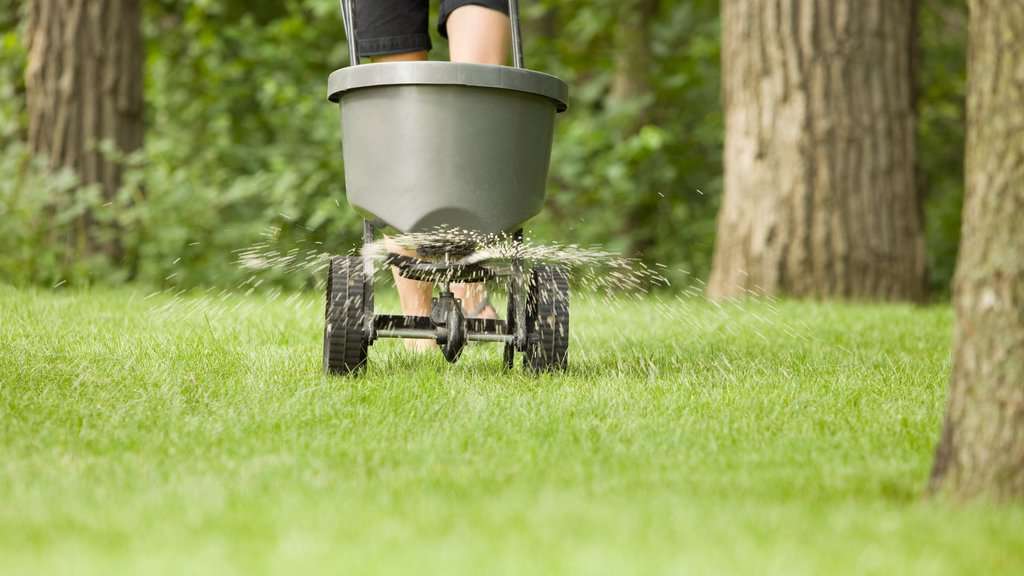
A lawn fertilizer spreader is a tool that distributes fertilizer evenly across your lawn. It usually comes with an adjustable mechanism that requires you to push, pull, or tow the spreader to dispense the fertilizer at a set rate.
This ensures your lawn gets the nutrients it needs without waste, weed growth, patchy results, or “burning” (which is when too much fertilizer causes a plant to die).
But not every lawn fertilizer spreader is created alike. Let’s understand which spreader you should go for and how to use it.
Types of Lawn Fertilizer Spreaders
Lawn fertilizer spreaders come in three forms: rotary, drop, and spray spreaders. Each is unique and used for something different.
1. Rotary (Or Broadcast) Spreaders
Rotary spreaders are push spreaders that dispense fertilizer in a fan-shaped, wide pattern.
They have a fan that spins around and flings the fertilizer out in a circle while you push them across your lawn.
You should buy a broadcast spreader if you have a large lawn and want to spend as little time outside as possible. It can also double as an ice melt spreader for your driveway.
2. Drop Spreaders
Drop spreaders dispense fertilizer directly beneath the hopper in a controlled, straight line as you walk up and down the lawn.
This makes them great if you have a smaller lawn or have one near flower beds, driveways, or sidewalks.
But since this spreader has a smaller dispensing area it increases your risk of missing sections and means you’ll take more time compared to broadcast spreaders.
3. Spray Spreaders
Spray spreaders disperse liquid fertilizer as a fine mist or spray across your lawn.
They cover large areas quickly, especially if you’re using a larger model, which saves time.
However, wind or rain can reduce their effectiveness.
These spreaders are available in backpack, handheld, and tow-behind models.
What to Consider When Choosing a Lawn Fertilizer Spreader
Here are five factors to keep in mind:
1. Time
Time determines how much effort you’re willing to spend on lawn care and in turn, the type of spreader you choose.
For example, if you have a big lawn with lots of flower beds but don’t have much time, a drop spreader will be more precise but slower to drip fertilizer.
2. Lawn Size
If your lawn is large, a broadcast or tow-behind model will cover the area quickly and help you save time.
But if you have the time and don’t mind the slower pace, you can go for a drop spreader. This will dispense fertilizer where you want but will require a big time investment on your part.
3. Accuracy
If your lawn has flower beds, pathways, or driveways, you need to keep fertilizer away from these to prevent burning and damage.
Drop spreaders will help you get the most accurate application to avoid this, but they’ll be slow.
Broadcast spreaders will require you to be more careful around the natural edges of your lawn, which can be doable if you’re willing to spend more time outside.
4. Fertilizer Type
Different spreaders are designed to handle different fertilizers.
For instance, while granular fertilizers are compatible with most spreaders, you’ll need to get a spray spreader if you want to use liquid fertilizers.
5. Budget
The bigger the lawn fertilizer spreader, the more expensive it will be.
And the larger your lawn, the bigger the fertilizer spreader you’ll have to buy if you want to save time and effort.
Make sure to figure out how much you’re willing to spend and then match that with your lawn care needs.
How to Spread Fertilizer on Your Lawn Using a Spreader
Once you’ve purchased a fertilizer spreader for your lawn, here’s how to use it:
1. Follow Your Manufacturer’s Instructions
Your spreader will most likely come with a label to help you set it up. Follow those instructions. This will most likely require you to:
- Measure a specific amount of fertilizer
- Fill it into the spreader
- Make sure the fertilizer gate is closing and opening properly
You should avoid filling the spreader on your lawn because any fallen fertilizer will burn your grass and plants.
2. Spread the Fertilizer
Once you’ve filled your spreader model, perform two passes at each end of your lawn.
This will create your header strips, which will make sure you don’t overspread fertilizer onto your sidewalks or plants when changing direction.
After that, make straight passes—usually following the longest direction—between the header strips until you cover your entire lawn.
If you’re using a rotary spreader, make sure there’s a tiny bit of overlap between your new and previous drop area. This will help you avoid an uneven application and grow a healthier lawn.
Save Time and Get Lush Lawn Growth With SunCo
Lawn maintenance and fertilizing isn’t as easy as it looks. You need to be precise with your application if you want even growth, vibrant color, and a healthy lawn free from patchy spots and brown, over-fertilized areas.
All of this takes time, effort, and the right tools. That’s where we can help.
At SunCo, we understand that the changing Midwest weather—the sudden storms, high humidity, and dry spells—can throw off your fertilizing schedule and make getting a green lawn much harder.
If you’re looking to make sure your lawn gets the right amount of nutrients exactly when it needs them, reach out to us today!