

Key Takeaways
- Weeds compete for resources, damaging lawn health, appearance, and curb appeal.
- Key weed control methods: prevention, cultural practices, chemicals, biological, and manual removal.
- Seasonal strategies vary; spring and fall are crucial for weed treatment.
- Common mistakes: misidentifying weeds, overusing herbicides, and mowing too short.
No matter where you are in the world, every beautiful lawn faces a common enemy: weeds.
Left unchecked, these unwanted plants can quickly turn your pristine turf into an unsightly mess.
At SunCo, we understand the challenges you face in maintaining a weed-free lawn.
So today we’re going to cover the topic of weed control in detail to help you get a better understanding of what you’re dealing with.
We’ll help you understand why weed control is essential, what methods are most effective, and how weed control changes with the seasons
The Impact of Weeds on Lawn Health
Weeds are more than just an eyesore. These opportunistic plants compete aggressively with your grass and desirable plants for essential resources like water, space, and nutrients.
In many cases, weeds can outpace or overpower younger/smaller plants in growth and nutrient uptake, damaging the overall health and appearance of your lawn.
This leads us to another problem: lower curb appeal. A weed-infested lawn can significantly detract from your home’s appearance and potentially lower its market value.
Other problems worth noting include:
- Higher maintenance since, to kill weeds as they grow, frequent mowing is required. Otherwise, they’ll interfere with regular lawn care activities.
- Some weeds can become hosts for various plant diseases and pests, creating additional problems for your lawn.
- Presence of weeds can lead to costly repairs since some species can block drainage pipes or interfere with landscaping features.
Common Weed Species in Midwest Lawns
While specific weed species you’ll encounter will vary depending on your location and lawn conditions, some common culprits in the Midwest include:
- Crabgrass (Digitaria sanguinalis): One of the most troublesome annual weeds in the Midwest. Germinates in late spring and spreads very quickly.
- Canada Thistle (Cirsium arvense): A perennial with sharp spines that spreads through both seeds and underground rhizomes, making it difficult to control.
- Dandelion (Taraxacum officinale): Though often seen in lawns, dandelions are also a concern for agriculture due to their deep taproots and seed spread.
- Giant Ragweed (Ambrosia trifida): Known for its large size and aggressive nature. Can grow up to around 15 feet tall and is an allergen for many people.
- Field Bindweed (Convolvulus arvensis): Featuring twining stems, this perennial weed can choke out crops or other plants in your garden or lawn.
- Common Purslane (Portulaca oleracea): This annual weed has succulent leaves and yellow flowers. Its fast and dense growth is problematic.
- Common Chickweed (Stellaria media): Has small, white flowers and delicate leaves but can be a problem due to its quick and dense growth.
These are just a few of the many weed species that you can find in Midwest lawns.
If you’re unsure of the weeds you’re dealing with, check out our guide on the different types of weeds for accurate identification and targeted solutions.
The 5 Main Weed Control Methods
At SunCo, we use different combinations of the following methods to control weeds:
Preventive Control
Prevention is better than cure when dealing with weeds, which is why preventive control is at the top of our list.
Implementing strategies that prevent weed from establishing itself in your yard can significantly reduce the need for more intensive control measures later on.
Such strategies include:
- Proper mowing, watering, and fertilization to ensure a dense and healthy lawn
- Using weed-free soil and mulch in landscaped areas
- Cleaning your lawn equipment on a regular basis to prevent weed seed spread
- Addressing bare spots quickly through overseeding or sodding
Cultural Control
Cultural control refers to methods that focus on creating an environment that favors your desired grass species while making it difficult for weeds to establish roots.
Examples that are specific to lawn care include regular soil testing and pH management, proper mowing height and frequency, and overseeding the soil with grass varieties well-suited to your local climate.
Chemical Control
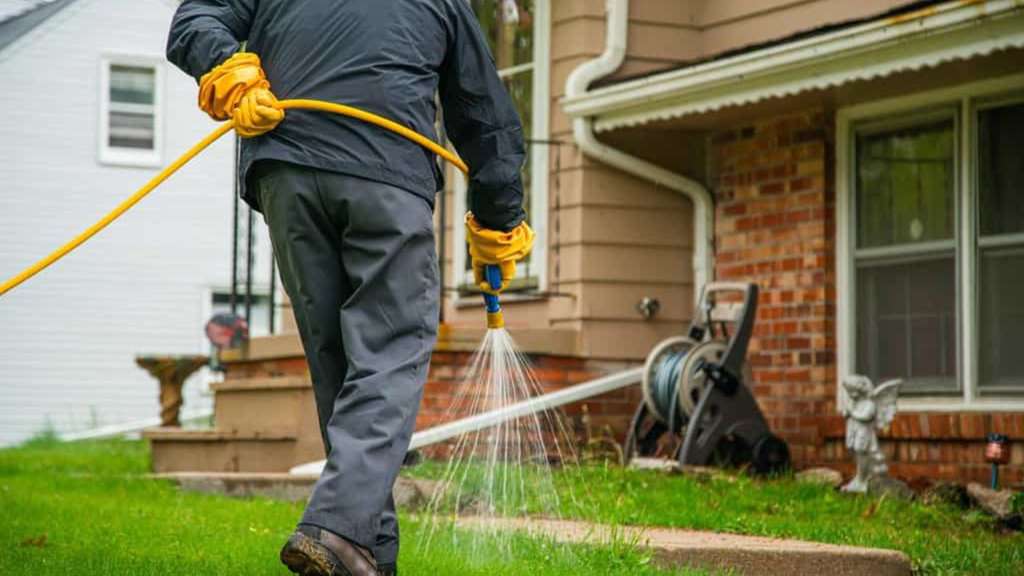
You guessed it; this category involves the use of herbicides to manage weed populations.
It’s quite effective, but you have to use these products responsibly and in conjunction with other control methods for optimal results.
Types of herbicides include:
- Pre-emergent herbicides, which are applied before weed seed germination (they can be considered a method of preventive control because you get fewer weed seeds this way).
- Post-emergent herbicides, which are used on actively growing weeds.
- Non-selective herbicides, which basically kill all vegetation they come into contact with (use with caution).
- Selective herbicides, which target specific weed species without harming desirable plants.
Biological Control
Less common in residential settings, biological weed control is the use of living organisms to suppress weed growth.
We typically resort to this approach when dealing with large-scale infestations or in environmentally sensitive areas.
Examples of biological control include:
- Insect biocontrol agents (e.g., flea beetles for leafy spurge control)
- Grazing animals (e.g., goats for brush control)
- Competitive planting (i.e., using desirable species to outcompete lawn weeds)
Mechanical/Manual Control
Mechanical/manual weed control is all about physically removing or damaging weeds to prevent their growth and spread.
This can be done via anything from hand-pulling, hoeing, and mowing to tilling and mulching.
The effectiveness of these methods often depends on the weed species you’re dealing with, their growth stage, and the extent of the infestation.
Some weeds have deep taproots that make hand-pulling either difficult or ineffective.
Others may have brittle stems that break easily, leaving the roots in the ground to regrow.
What’s more, some weeds are best controlled before they produce seeds, while others might be more vulnerable at different stages.
For instance, young, small weeds are often easier to remove by hand or hoe, while Mature weeds with established root systems may be more resistant to manual removal.
How Weed Control Changes Throughout the Year
Here’s a quick seasonal guide to effective weed control in the Midwest:
| Season | Weed Control Actions |
|---|---|
| Spring (March-May) | Apply pre-emergent herbicides for annual weeds. Start post-emergent treatments for perennials. Mow and water properly; overseed bare spots. |
| Summer (June-August) | Water deeply but infrequently. Mow regularly. Monitor for pests/disease; use post-emergent herbicides as needed. |
| Fall (September-November) | Apply post-emergent herbicides for winter weeds. Overseed thin areas, and apply fall fertilizer. |
| Winter (December-February) | Plan weed control for next year. Remove any winter weeds that appear. |
Spring (March to May)
This is the perfect time to apply pre-emergent herbicides for summer annual weeds.
As for perennial weeds, you can begin post-emergent treatment as soon as they become active.
Proper mowing and watering practices are important during this time of the year, in addition to overseeding bare spots.
Summer (June to August)
During summer, you have to do two things:
- One, you want to water deeply but infrequently and continue regular mowing at proper heights.
- Two, monitor for signs of pests or disease and apply post-emergent herbicides as needed (check instructions for temperature limits)
Fall (September to November)
In Autumn, you want to apply a post-emergent weed killer for winter annual and perennial weeds. It’s also important to overseed thin areas and apply a fall fertilizer to strengthen the roots of your desired grass for winter.
Winter (December-February)
Winter is the time to plan your weed control strategy for the coming year.
If you come across any winter annual weeds that may appear during warm spells, you can simply remove them via hand-pulling, hoeing, or an appropriate herbicide if necessary.
Common Weed Control Mistakes to Avoid
If you don’t have much weed management experience, here are a few common mistakes to watch out for:
Improper Species Identification
Some weeds may look similar but require different approaches.
Failure to accurately identify the targeted weed you’re dealing with may set you up for failure by having you use the wrong management approach.
Over-Relying on Herbicides
Excessive herbicide use can lead to resistant weed populations and may harm beneficial organisms.
We’d as such recommend integrating chemical control with other methods.
Applying Herbicides at the Wrong Time
Timing is crucial with herbicide use. Pre-emergent herbicides must be applied before the weed germinates while post-emergents are most effective on actively growing weeds.
Neglecting Cultural Practices
Don’t go reaching for herbicides the moment you spot unwanted growth on your lawn; give cultural practices a try first.
Mulching for instance helps suppress weed growth by blocking sunlight.
Mowing Your Lawn Too Short
Cutting grass too short weakens it, allowing pesky lawn weeds to outcompete the turf. Thus, you need to maintain proper mowing height for your desired grass species.
Not Cleaning Your Equipment Between Areas
Weed seeds can spread via mowers, tillers, other lawn care equipment, and even germinate in your compost pile.
So you need to clean your tools thoroughly between different areas to prevent weed dispersal.
Ignoring Small Infestations
Small problems can quickly escalate to large ones. Be sure to address weed issues early before they spread and become harder to control.
Not Interested in DIY Weed Control? SunCo Is the Way to Go
Effective weed control requires more than just applying herbicides.
It’s a year-round approach that some homeowners may not have the time, energy, or resources to tackle, which is where we come in.
With over 30 years of experience serving both residential and commercial properties in the Midwest, we understand the unique challenges posed by local weed species, soil conditions, and climate.
We recognize that every lawn is unique, which is why we offer personalized weed control plans tailored to your specific needs. Our process includes:
- Thorough lawn assessment and weed identification
- Soil testing to determine nutrient needs
- Development of a customized treatment plan
- Regular monitoring and adjustment of strategies as needed.
Don’t let weeds compromise the health and beauty of your lawn.
Get in touch with us today by filling out our contact form or clicking the “Call Us” button at the top of your screen, right next to “Service Request.”