


Key Takeaways
- Most lawns need 1 inch of water weekly, adjusted by soil type.
- Water early mornings; avoid daily watering to prevent shallow roots.
- Check watering depth with a screwdriver; mushrooms indicate overwatering.
- Use sprinklers, drip irrigation, or smart systems for efficient lawn care.
How Long Should You Water Grass?
On average, lawn grasses should be watered up to 1 inch per week.
Your grass needs adequate watering to develop deep, firm roots in the soil.
Here’s how to go about it, and other factors that affect how long you should water the grass.
The actual quantity can vary depending on factors like your soil type and weather conditions.
Here’s how long you should water the grass based on soil type:
- Sandy soil: 2-3 times weekly, 20-30 minutes per session
- Clay soil: Once or twice weekly, 15-20 minutes per session
- Loamy soil: Twice weekly, 25-30 minutes per session
Considerations for Soil Drainage
For sandy soils, you have to consider the high levels of porosity when applying the “inch of water per week” rule.
They require more water but less frequent, deeper watering sessions to promote root growth.
With clay soils, you need to balance watering and proper drainage, since the soil retains a significant amount of water even in a short watering time.
This can increase the risk of plant diseases, as the roots aren’t designed to sit in water constantly.
With loamy soils, it’s easier to water the soil without any adverse effects on drainage.
Loamy soils have balanced levels of water retention compared to clay or sandy soils, and won’t leave your lawn waterlogged.
It’s essential to avoid daily watering as it’ll result in a shallow root system.
Such root systems dry out quickly, weakening your lawn.
How Do You Know When You’ve Watered Enough?
One way to check if you’ve watered the grass sufficiently is by pushing a screwdriver into the grass and checking how easily it sinks into the turf.
If it easily goes six or seven inches deep, then your lawn watering frequency is just right. If not, you need to water it more often.
A sign that the lawn needs less water per week is if you see mushrooms growing on it, which is a result of overwatering.
To achieve this, reduce the amount of water you give your lawn weekly until the mushrooms are visibly gone.
When Should You Water The Grass?
Don’t wait until your lawn turns grayish or dull green before watering it. But if it has come to this, your grass lawn is crying out for moisture.
You should also water your lawn if, when you tread on it, the footprints linger for long before disappearing.
This is a sign that the grass blades don’t have the required moisture level to spring back into place after they’ve been disturbed.
The best time to water your lawn is in the early morning hours, typically before 10 am.
The cool temperature and less windy conditions allow the soil to better soak up the moisture down to the roots before it evaporates.
If you water in the evening, aim for between 4-6 pm so grass blades have enough time to dry before nightfall.
Watering anything later than this time will increase the risk of plant disease.
Also Read: The worst time to water your lawn
What To Know About Watering Different Kinds of Lawns
How long you water your lawn isn’t dependent only on the soil type. An often overlooked factor is the grass type.
1. Warm-Season Grasses
Warm-season grasses grow well when the temperature is above 80 degrees Fahrenheit and slow down when daytime temperatures drop.
However, they still need regular watering to stay healthy.
If the grass in your turf consists of warm-season grasses, such as Bermuda grass, centipede grass, or zoysia, you should continue watering them throughout the growing season, as long as they require regular mowing.
2. Cool-Season Grasses
With cool-season grasses like rye, fescue, and bluegrass, you should water at least one inch weekly until the end of the growing season.
With tall fescue, you should keep in mind that the plant has high drought tolerance, and therefore its water requirements are less than fine fescues or Kentucky bluegrass, which go dormant if not watered.
3. New Lawns
In the first year of your lawn’s growth, you should water regularly with the aim of keeping the top one inch of the soil steadily moist, but not soggy.
After planting, mist the entire seeded area at least once daily (more often in hot, dry weather).
Once seeds germinate, continue regular watering until the grass reaches about three inches in height.
At this point, you can reduce the watering frequency to twice a week to ensure that the grass roots grow deeply into the soil.
Types of Watering Techniques
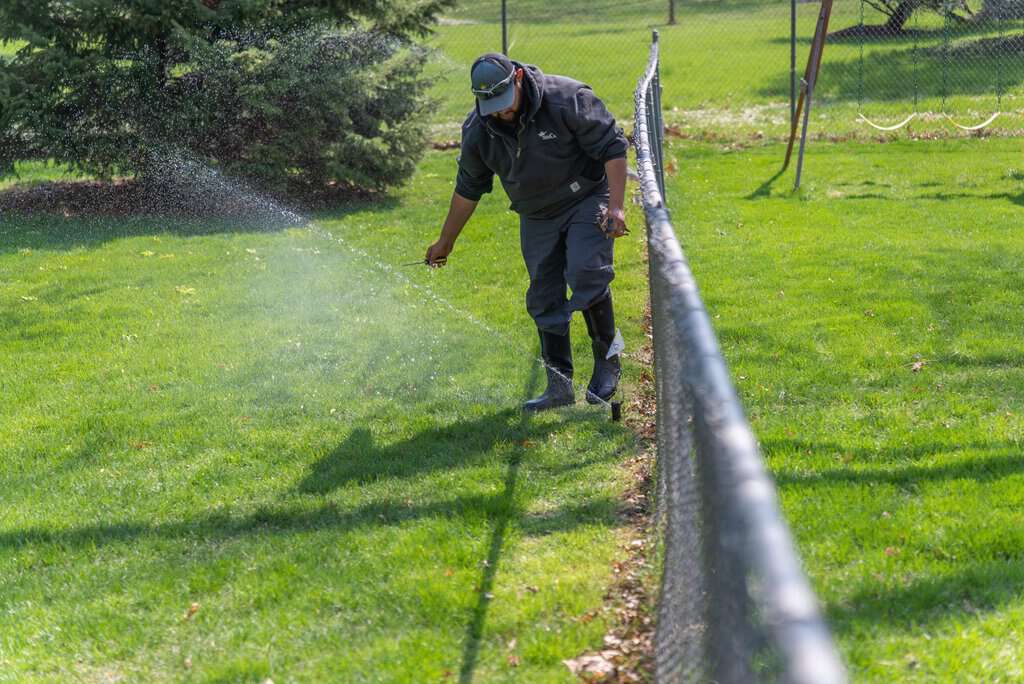
Here are some ways to water your lawn, with each offering its benefits:
1. Sprinkler Systems
Sprinklers are popular because they’re easy to use and cover large areas.
Pulsating sprinklers work well in windy conditions because they shoot water horizontally at high speeds.
Rotary sprinklers spray in a circular motion, while in-ground sprinklers deliver water in highly efficient patterns
2. Drip Irrigation
This watering technique delivers water slowly through tubes with emitters directly to the grassroots.
It works best for homeowners in drought-prone regions looking for more eco-conscious watering solutions.
Using drip irrigation gives minimal moisture evaporation and runoff.
3. Manual Watering
Manual watering with a hose and nozzle comes with adjustable spray patterns that are ideal for small lawns, spot watering dry patches, and delicate plants.
Although this technique can be time-consuming, it provides complete control over water placement, making it suitable for targeted watering.
4. Smart Irrigation
Smart irrigation systems utilize weather data, soil sensors, and Wi-Fi to adjust watering automatically.
This watering technique is ideal for eco-conscious homeowners and effective in preventing overwatering.
Achieve a Healthy Lawn Year-Round
Knowing how often to water your lawn might sound like a simple task, but proper care can’t be achieved without considering your soil type, weather conditions, and the type of grass in your lawn.
To keep your lawn healthy, water it at least one inch per week, preferably in the early morning hours, and adjust the watering schedule according to the seasons and your grass type.
Let SunCo Lawns be your guide to expert lawn care and landscape maintenance, helping you keep a healthy yard throughout the year.