
Key Takeaways
- Broadleaf weeds have flat leaves, deep roots, and unique growth habits.
- Common types like dandelion and chickweed compete for lawn resources and space.
- They reduce lawn aesthetics, attract pests, and spread diseases and allergens.
- Effective control prevents seed spread, resource depletion, and maintenance challenges.
Broadleaf weeds are a type of weed known for their large size.
They grow at various periods throughout the year, so you might contend with annual broadleaf weeds, or perhaps perennial mouse ear chickweed, or even biennial weeds.
These unappealing weeds can impede your quest for a healthy lawn, as their rapid spread can hog up resources that noninvasive plants, flowers, and grasses need to grow and thrive.
That’s why we at SunCo decided to put together this guide.
We’ll talk about types, how broadleaf weeds spread, how to identify them, and, most importantly, your removal options.
You’ll feel ready to take charge and enjoy a greener yard.
Broadleaf Weeds 101
Most broadleaf weeds are very tough to kill.
They also spread fast, meaning you need a reliable form of weed control to keep them out of your yard or off your commercial property.
There are all sorts of broadleaf weeds out there, including:
- Thistle
- Wild onion
- Broadleaf plantain
- Ragweed
- Milkweed
- Field bindweed
- Ivy
- Common dandelion
- Wild geranium
- Creeping buttercup
- Clover
- Dollarweed
- Chickweed
- Knotweed
- Henbit
- Cow parsnip
Common Examples of Broadleaf Weeds
- Dandelion: Distinguished by bright yellow flowers and deeply toothed leaves. The taproot system makes them difficult to remove completely.
- Chickweed: Small, white, star-shaped flowers with smooth, oval leaves. It’s a low-growing plant with hairy stems.
- Ground Ivy: Round, scalloped leaves with small, purple flowers. It spreads through creeping stems, hence the name creeping Charlie.
Characteristics of Broadleaf Weeds
To distinguish between grassy weeds and broadleaf weeds, note the following differences:
| Grassy Weeds | Broadleaf Weeds | |
| Seedlings | One leaf | Two leaves |
| Leaf Venation | Parallel veins | Netlike pattern |
| Flowers | Floral parts are usually small and inconspicuous and in multiples of 3 | Floral parts are usually showy and in multiples of 4 or 5 |
| Stems | Vascular bundles are usually complexly arranged | Vascular bundles are usually arranged in a ring |
| Roots | Fibrous root system | Usually deep taproot systems, sometimes fibrous systems |
| Growth Habits | Uniform, grass-like, spreading through underground horizontal stems or aboveground stolons | Various, including upright, creeping, or sprawling. Complex structure with multiple stems and branches |

How Do You Identify Broadleaf Weeds?
Although having a case of broadleaf weeds on your property is not a fun discovery, the good news is that identification is often easy.
They stand out like a sore thumb among grassy weeds and non-weed grasses.
They have fiber-like roots that are sometimes taproots and other times, are thin.
The roots are key to their spread, as they rely on rhizomes or seeds to cross your lawn and grow horizontally.
If the weed contains showy flowers (such as yellow flowers or other colors), and nodes in which leaves have sprouted, those aren’t grassy weeds.
It’s a broadleaf troublemaker. That’s also the case if you notice net-like veins and slightly toothed leaves.
Grassy weeds can masquerade as standard grasses, something broadleaf weeds cannot do convincingly.
Further, grassy weeds only grow one leaf at a time after germinating from seed, so that’s another handy way to tell them apart.
Impact of Broadleaf Weeds
Like any other type of weed, broadleaf weeds pose a danger to your lawn in many ways, and you should control them efficiently before their spread becomes a persistent concern.
- Resource Exhaustion: Weeds compete with your healthy lawn grasses for water, nutrients, and sunlight.
- Reduced Aesthetics: Unlike grass, many broadleaf weeds have colorful, showy flowers and unique growth habits. They’ll stand out on your lawn, making it look unkempt.
- Increased Maintenance: Routine lawn care becomes much more difficult if the broadleaf weeds spread their seeds. You may need to mow more often or apply more herbicides and pesticides to kill the broadleaf weed seedlings, which can degrade your soil’s quality.
- Pests and Diseases: Weeds often carry diseases and pests that can damage neighboring plants.
- Allergenic Effects: Some broadleaf weeds, like ragweed, can cause allergies in humans when releasing pollen.
Broadleaf weed control could be difficult, so contact SunCo experts today to get your lawn in optimal shape.
Broadleaf Weed Removal Options
So now you’re pretty sure you have broadleaf weeds on your property, whether they’re summer or winter annuals, biennials, or perennials.
Now is no time to panic. Instead, you need to be ready to inhibit weed growth, ideally before seed production, but at the very least, before the flowers bloom.
Here are your options for removal.

Manual Removal
If you don’t mind getting a little down and dirty, you can tackle annual weeds and unwanted flower stalks by removing broadleaf weeds manually.
This is only recommended if you don’t have many weeds across your residential or commercial property.
Many broadleaf weeds have deep roots, which means putting plenty of sweat equity into removing just one weed.
Don’t only use your hands. Rely on gardening tools like a dandelion fork or garden trowel.
Learn when your weeds tend to sprout, such as early spring, and then tackle them early on in the growing season.
Broadleaf Herbicide
If you have a thick lawn or excessive broadleaf weed spread, it’s time to move on to the more effective and less physically arduous option, herbicide.
Not all herbicides are created equal. You can select between pre- and post-emergent types.
Pre-emergent herbicide is designed to kill broadleaf weed seedlings and young plants before they can sprout from the soil.
While effective, using pre-emergent herbicide requires you to learn your broadleaf weed growth habits so you can be ready before you see sticky chickweed or narrow-leaved plantain seed heads.
Post-emergent chemical herbicides are designed to treat broadleaf weeds like common chickweed or buckhorn plantain after they’ve already sprouted.
You can use this type of herbicide in early summer, late spring, early fall, or whenever else you notice dense growth from unwanted weeds.
The best herbicides for broadleaf weeds are triclopyr, dicamba, 2-methyl-4-chlorophenoxyacetic acid or MCPA, Mecoprop or MCAA, and 2,4-D.
Always follow the packaging instructions for herbicide application and work carefully.
Many of the formulas that are effective on broadleaf weeds can also affect healthy turfgrass, flowers, and other plants.
Don’t apply herbicide if there’s rain in the forecast over the next several days, as the precipitation will wash it away.
For that reason, you should also avoid watering your lawn for several days after using herbicide.
Mulching
Stopping weed seeds in their tracks is as simple as mulching.
That said, this is much more recommended as a pre-emergent chemical-free treatment rather than one after the shallow roots have already deepened.
At that point, mulching will slow down the weed spread but won’t stop it as effectively.
However, if you treat those weeds and then mulch, you can keep that area of your residential lawn or commercial property weed-free.
Mulching is also beneficial in that it augments your landscaping, giving you all the more reason to consider it.
Preventing Broadleaf Weed Recurrences
Whew. You got rid of the broadleaf weeds on your property, but it was no easy feat.
You’d like to keep them from coming back, so what can you do?
Try incorporating these habits into your lawn care.
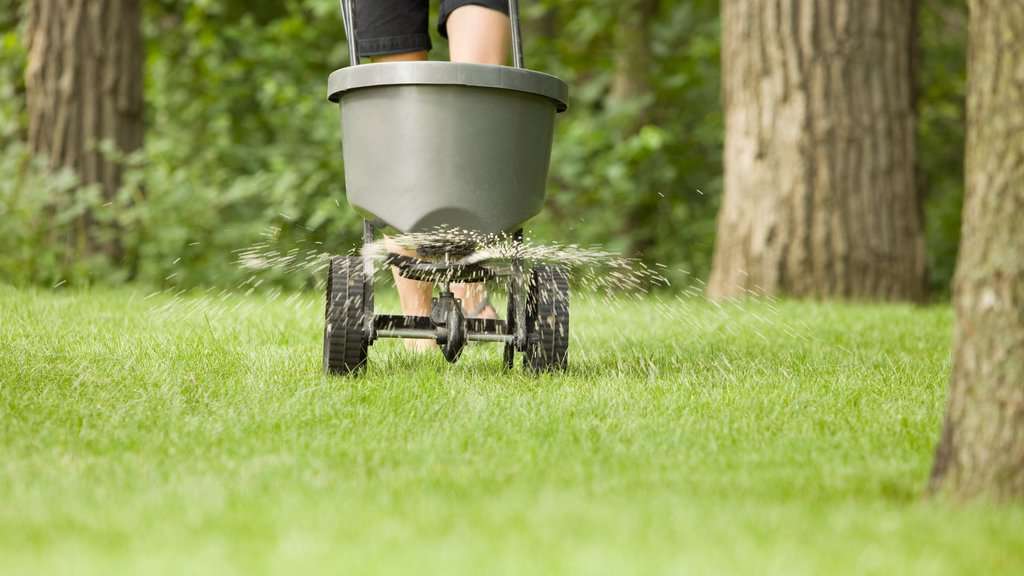
Continue Using Pre-Emergent Herbicide
You now know the growth habit of your local broadleaf weeds. That means you’re in an excellent position to treat the weeds with a pre-emergent herbicide.
The seed leaves and root system won’t stand a chance, allowing you to focus on other lawn tasks without broadleaf weeds.
Grow Thick Grass
The thicker your grass is, the harder it is for broadleaf weeds to pop up.
Even if you do have a few weeds here and there, their spread should be slowed by the thickness of the grass.
Turfgrass, zoysiagrass, tall fescue, seashore paspalum, perennial ryegrass, Kentucky bluegrass, and bermudagrass are some of the best grass species to grow.
Keep Your Lawn Healthy
Prioritize a green, lush lawn, whether for a commercial or residential property.
Maintain a regular fertilizing schedule so your grass and surrounding plants remain healthy and strong.
Nutrient deficiencies will allow broadleaf weeds to take over, as the grass will be too weak to fight back.
Another pillar of smart lawn care is watering. The key is to water the grass deeply but not too regularly.
That can lead to soggy soil and again, weakened grass that broadleaf weeds can easily dominate.
Watch Your Mowing Height
Speaking of your lawn, when the time comes to mow it, watch how much height you leave behind.
As a rule of thumb, warm-season grasses shouldn’t be less than two inches, while cool-weather grasses less than three inches.
Check Out These Other Terms
- What Is Overseeding?: Learn what overseeding is and how it can help you fill in those pesky empty patches on your lawn.
- What Is Lawn Care?: Discover the essentials of lawn care and learn how to maintain a lush, healthy lawn!
- What Is Lawn Aeration?: Learn what lawn aeration is and how it contributes to better nutrient absorption.