


Artificial grass uses synthetic fibers to mimic real grass, and it’s made to withstand heavy foot traffic and resist changes in vibrancy or appearance.
And if you’ve spent a summer battling brown patches or a winter staring at a frozen lawn, you might have wondered if it’s worth it.
Well, between the Midwest’s hot summers, heavy snowfalls, and unpredictable storms, artificial turf has its pros and cons.
Here’s what you need to know before making the switch.
Key Takeaways
- Artificial grass reduces maintenance and water use but has a higher upfront cost.
- Midwest homeowners use turf for year-round beauty and weather durability.
- Turf types vary in pile height, density, and infill—choose based on your needs.
- Proper installation, drainage, and occasional cleaning extend turf lifespan.
- Artificial Grass Vs. Natural Grass
- What Is Artificial Grass Made Of?
- Why Midwest Homeowners May Be Switching to Artificial Grass
- What to Consider Before Installing Artificial Turf in the Midwest
- How to Choose an Artificial Grass for Your Synthetic Turf
- Tips to Maintain an Artificial Turf
- Manage Your Lawn, Backyard, and Garden Needs with SunCo!
Artificial Grass Vs. Natural Grass
Here’s a quick comparison of artificial and natural grass to help you see which is better for you.
| Aspect | Artificial Grass | Real Grass |
|---|---|---|
| Aesthetic | Offers diverse shapes, colors, and sizes Have a plastic feel and look fake | Provides a natural look Can change in appearance depending on the weather and maintenance |
| Care and Maintenance | Requires little maintenance | Requires regular watering, mowing, weeding, fertilizing, overseeding, and pest control |
| Cost | Has a high initial cost but lower maintenance costs | Offers an affordable initial cost but has recurring maintenance costs |
| Environmental Impact | Uses less water Doesn’t require fertilizers or harmful pesticides Contributes to microplastic and heat pollution | Requires lots of water Requires fertilizers or pesticides, which can harm the area Filters pollutants and dust in the air |
What Is Artificial Grass Made Of?
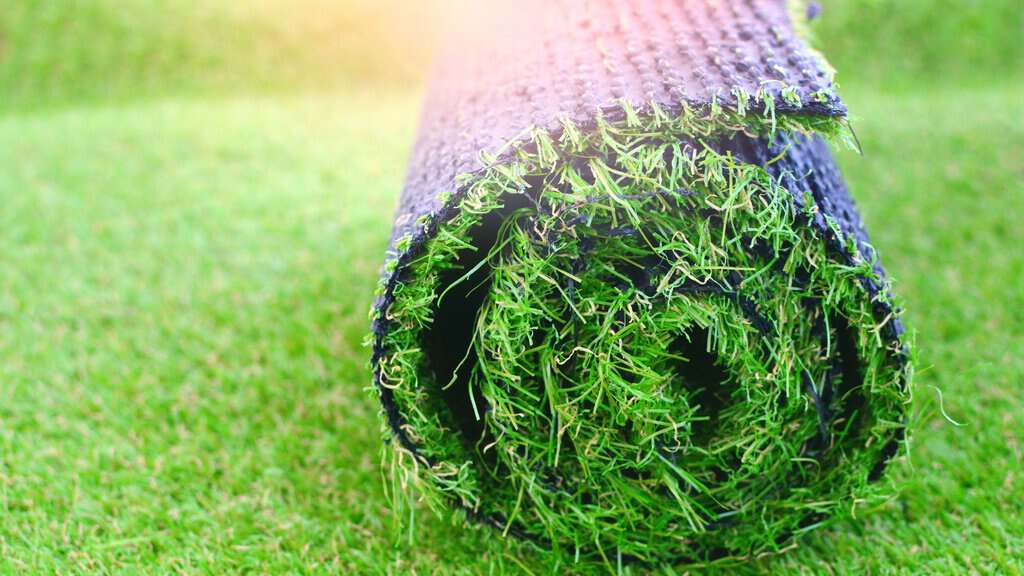
Artificial lawn grass uses synthetic fibers made of polypropylene or polyethylene.
Quality ones are like carpets with several layers, including:
- A solid backing
- Cushioning
- Drainage layers
- Infill
- Machine-stitched grass blades
A lot of artificial lawns today look more realistic than ever, with various pile heights and shades of green and brown available to give the illusion of authentic grass growth patterns.
Why Midwest Homeowners May Be Switching to Artificial Grass
Here are common reasons why many homeowners and property developers prefer using artificial over natural:
Save Time and Money
With Midwest summers bringing heat waves and occasional droughts, keeping a natural lawn green can mean skyrocketing water costs, especially if you’re dealing with large yards.
You typically need to water a lawn for hours at a time, so the costs can add up.
Real grass needs regular watering, which can take a big chunk of your bill, especially if you have a huge landscape to care for.
Although you can water artificial turfs occasionally to clean them and enhance their appearance, it won’t impact your water bill as much as regular lawn watering does.
Artificial grass also doesn’t require regular landscaping maintenance, so the cost of lawn fertilizer, removing weeds and pests, and trimming grass vanishes when you opt-in.
Doesn’t Damage Easily
Unlike organic grass, artificial grass can withstand heavy foot traffic, vehicles, and even active pets since it’s designed to be durable and long-lasting.
The synthetic blades simply bounce back and maintain their shape after being stepped on.
Midwest winters can be brutal, but synthetic turf doesn’t turn into a muddy mess after snowmelt in early spring, and it stays green even when real grass goes dormant in the cold.
You don’t need to worry about dying grass or a patchy lawn.
Preserve the Beauty of Your Lawn or Garden
One of the main appeals of artificial grass is its aesthetics. You can choose various styles, colors, and grass heights to create your ideal artificial turf.
Besides this, your lawn or landscape will always look green, fresh, and lush every season since it never withers.
Using synthetic grass is ideal for commercial properties that aim to attract customers or visitors, as well as homeowners who’d rather have the aesthetics without the maintenance cost.
What to Consider Before Installing Artificial Turf in the Midwest
Before installing synthetic grass products, consider the following:
Expensive to Install
Although artificial grass is cheap to maintain, it can be expensive to install. It can cost around $15 to $19 per square foot.
A mid-quality grass that spans about 500 square feet can range from $7,400 to $9,350. It can be a hefty price to shell out, especially for a large property.
The price can increase or decrease depending on the property size, the material of the synthetic grass, and your preferences.
Although you can find fake grass at affordable prices, remember that you may have to sacrifice quality.
Not As Eco-Friendly As It Seems
Although using artificial grass reduces water consumption, lessens pesticide use, and is recyclable, setting up a synthetic turf can harm the environment.
For one, plastic turfs can break down and cause microplastic pollution in aquatic environments and waterways.
Also, replacing real grass with artificial grass reduces areas for biodiversity.
It can trap heat due to the infill material and contribute to heat islands.
Although some products offer better heat resistance, they can still contribute to increasing temperatures.
If you’re eco-conscious, consider the impact on the environment.
May Require a Local Permit
If you’re installing synthetic turf in a residential or commercial area, you may need a building permit.
To avoid legal concerns, check your city or HOA regulations about installing artificial grass.
You will need a permit for:
- Installing fake grass on uneven terrain or sloped yards, which are common in Midwest properties
- Covering over 2,500 square feet of soil
- Changing the slope grade by over 24 inches
While backyard installations usually don’t require a permit, some HOAs or municipalities may have restrictions on artificial grass.
Some neighborhoods also prefer natural lawns for aesthetic reasons, and certain areas have rules about water drainage.
Always double-check with your local government to avoid fines or removal orders.
How to Choose an Artificial Grass for Your Synthetic Turf
Follow these steps and tips to find the right artificial grass for your turf needs.
1. Know Your Purpose and Preferences
What are you looking for in a landscape? Identify your purpose and preferences for using artificial grass.
Ask yourself these questions to help you figure out what you’ll need for your space:
- Will the grass be under the sun or shade?
- Do you have pets or kids who will run around the grass?
- Will the area receive lots of foot traffic?
- What is your budget?
- Do you prefer eco-friendly artificial grass products?
2. Understand Terminologies
When researching and buying artificial grass, here are terminologies you must learn to choose and buy your ideal synthetic grass.
- Yarn: Artificial grass uses polyethylene (common, versatile, durable, aesthetic, and soft), polypropylene (for putting greens and using it as a thatch layer), and nylon (expensive, durable, used for putting greens).
- Density: It’s the number of blades per square inch. High-quality turf products often have a denser stitch.
- Pile Height: It refers to the blade length of the fake grass. Sports fields have shorter pile heights between ⅜ and ⅝ inches, while realistic front yards have long pile heights between 1 ¼ and 2 ½ inches.
- Face Weight: It refers to the amount of ounces of material per square yard, minus the backing material. Quality and durable artificial grasses have heavier face weights.
- Thatch: This additional fiber mimics grass’ natural and varying color, weight, and texture. Search for a synthetic grass product with thatch to make your front or back lawn look more realistic.
- Infill: It’s made of various materials, such as crumb rubber and silica sand. It enables the fibers to stand upright and prevents the turf from shifting.
- Backing: The backing stabilizes the entire turf product or system. It consists of the primary backing (where the grass fibers are stitched to) and the secondary backing (which locks the tufted fibers in place).
- Color: Choose from various colors that imitate the look of real grass.
- Sub-Base: It’s a layer of compacted sand, gravel, granite, and rocks laid beneath artificial grass to act as a foundation. It’s not part of synthetic grass, but it’s important to install quality artificial turf.
3. Know What Good Artificial Turf Looks Like
Premium artificial grass includes a polyurethane backing material for durability, a natural appearance, and good drainage.
Some also have a UV-resistant protective coating to protect them from the sun’s damage.
Consider looking at the following characteristics before you purchase and install artificial turf:
- Face weight
- Durability
- Material
- Blade shape and height
- Thatch color
- Drainage
- Fire retardant
4. Compare Samples
Before you purchase the synthetic grass, make sure to ask for a sample and compare it with other samples.
When comparing samples, stand back about 10 feet or 15 feet away to help you notice differences in shape, color, and texture.
You can also compare your samples to natural lawns in your property or neighborhood to see how natural-looking the artificial grass looks.
Also, compare the samples’ density, pile height, face weight, and overall quality.
5. Consider Climate and Maintenance
If your area experiences heavy or frequent rainfall, look for artificial lawns with good drainage, such as those with permeable backing.
Consider how your area’s weather can affect the quality of the artificial grass in the long run.
Also, think about the maintenance needs of the grass product.
Ideally, a more expensive upfront cost results in lower maintenance due to the higher quality and installation.
However, you still need to maintain your artificial turf, especially due to extreme weather conditions.
6. Check the Warranty
Besides looking at the price, check the warranty. After all, your artificial turf is an investment. It’s recommended to get a quality product with a warranty.
When checking the warranty, read the fine print and see what it covers and doesn’t cover. Look for a warranty that covers fiber loss, UV stability, and fiber repair. And keep in mind, the longer the warranty period, the better!
Tips to Maintain an Artificial Turf
Once you have set up your synthetic turf, here’s how to care for it to extend its lifespan.
- Set Up a Drainage System: Whether you’re installing on soil or concrete, ensure that you have a proper drainage system to prevent flooding or mold buildup. You can drill small, evenly-spaced holes into the base.
- Clean Occasionally: The artificial turf can trap dirt, debris, and soil, so you must clean it occasionally. You may brush the grass to remove dirt stuck on it or clean it with water.
- Avoid Using or Placing Damaging Items: Sharp tools like a metal brush or garden rake can rip or puncture the artificial grass fibers. Also, avoid placing hot objects like a barbeque grill or stubbing cigarettes on the turf.
- Remove Weeds: Various types of weeds can grow around your turf, even if the turf is artificial. If you see any weeds, pull them out or spot-treat them with a post-emergent herbicide.
Manage Your Lawn, Backyard, and Garden Needs with SunCo!
Maintaining your backyard, lawn, or commercial landscape can be challenging, especially if you’re caring for organic grass, plants, and trees.
If you need help caring for your lawn year-round, SunCo offers various services for lawn fertilization, plant health care, pest and weed control, sprinkler systems, and other commercial services.
For more information, contact our team today!