Key Takeaways
- Core aeration improves soil health by removing plugs to boost root access.
- It increases oxygen, water absorption, and breaks down surface thatch buildup.
- Drawbacks include visible soil plugs and potential weed seed exposure.
- Core aeration is more effective than spike or liquid methods in most cases.
What Is Core Aeration?
Core lawn aeration is one of the many techniques for improving your lawn’s soil health. It involves using a specialized machine called a lawn core aerator, which has hollow tines, to extract plugs of soil, or “cores,” from the ground.
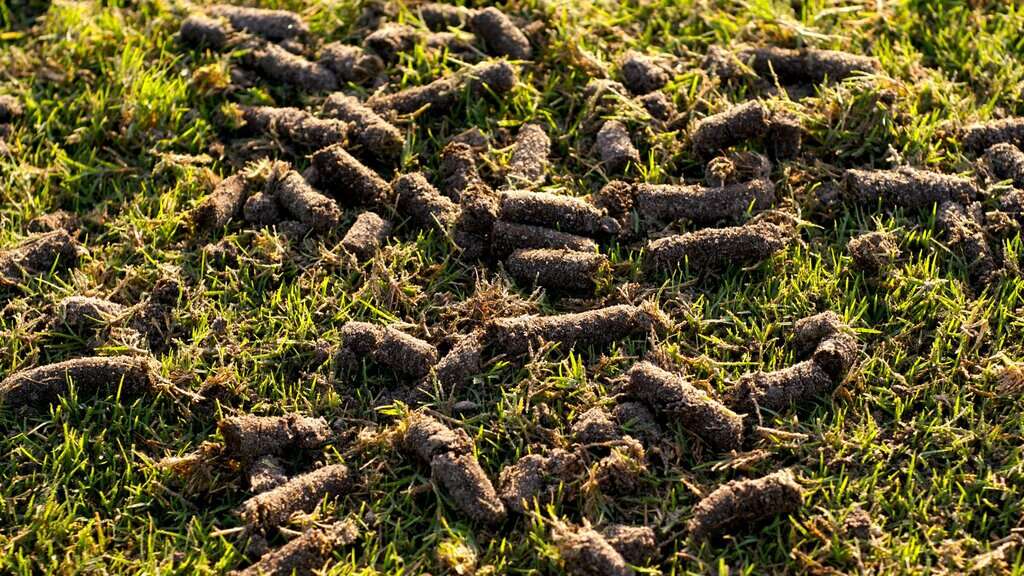
The soil cores are left on the ground to decompose naturally, while the holes they leave are typically located next to plant roots, and any nutrients that enter them become easily accessible to the plants.
Core Aeration: Pros and Cons
Like other aeration methods, core aeration will:
- Increase your soil’s fertility, making your plants healthier, more robust, and more resistant to environmental stresses.
- Increase oxygen levels in the soil, thereby benefiting the microorganisms living in it and promoting root growth.
- Allow water to penetrate the soil and reach grass roots more easily.
- Break down thatch buildup on the soil surface, facilitating all the aforementioned benefits.
However, two concerns with core aeration are:
- The potential of bringing weed seeds into the surface, which will proliferate over time.
- The concern with unsightliness caused by the extracted plugs, which take long to decompose.
You can learn more about aeration in general here.
When to Core Aerate?
Your plants will benefit best from your aeration efforts if you target their peak growth seasons. Cool-season grasses (fescue, bluegrass, etc.) grow actively from early spring to early fall, whereas warm-season grasses (St. Augustine, Bermuda, etc.) are most active from late spring to late summer when the weather is hot.
For the best convenience and results, aerate your soil when it’s moist—not saturated or dry.
How Does Core Aeration Compare to Spike and Liquid Aeration?
Core aeration might be more convenient and effective than spike and liquid aeration.
Spike Aeration
Spike aeration has you using solid spikes or tines to poke holes in the ground without removing any soil. While it’s easier to perform, less messy and requires cheaper equipment, it provides temporary relief, and the holes it leaves aren’t as efficient at enabling resources to reach the roots.
Liquid Aeration
Liquid aeration involves applying a liquid solution with ingredients that help break down compacted particles and improve the soil structure of your lawn. It’s easy to perform, it can be done at any time of the year, and it doesn’t leave soil plugs on the lawn, which some might consider messy.
However, the ingredients will take time to kick into effect and start breaking down the compacted soil particles, and their effectiveness will vary depending on the ingredients’ quality and your soil’s type and condition.
For the best liquid aeration treatment, try SunCo Lawns’ natural aeration with soil builder solution. Contact us today to schedule a visit; let’s grow something beautiful together!
Check Out These Terms!
- What Is Lawn Aeration? Learn more about lawn aeration and all the exciting benefits it has in store for your lawn!
- What Is Liquid Aeration? Discover what liquid aeration is, how it is performed, and how it helps you grow a healthy lawn!
- What Is Lawn Care? Beyond aerating your lawn, learn what other steps you can take to make your lawn healthier and more lush!