


Ornamental grasses are hardy, decorative plants that add texture, movement, and color to any landscape.
These grasses are perfectly suited for the Midwest, where winters are cold, and summers are hot.
More than just space-fillers, they sway in the breeze, bring year-round visual interest, and thrive with little maintenance.
Let’s explore the best ornamental grasses for Midwest gardens and how they can transform your outdoor space with minimal effort.
Key Takeaways
- Ornamental grasses add beauty, movement, and structure with minimal maintenance.
- Midwest-friendly varieties thrive in heat, drought, and poor or sloped soils.
- Native grasses like little bluestem and switchgrass support biodiversity naturally.
- Avoid invasive grasses like pampas and reed canary to protect your landscape.
Why Choose Ornamental Grass for Your Landscape
Unlike traditional turfgrass, most ornamental grasses require minimal upkeep.
They aren’t meant to be mowed into a neat lawn; they’re designed to grow tall, sway in the breeze, and add a natural, meadow-like charm to your property.
This grass thrives in well-drained soil, tolerates dry conditions, and can even prevent erosion control on sloped properties, which is a common challenge in the region.
Even better, many varieties are native plants, which means they’re perfectly suited to the Midwest’s unique climate and can attract birds by providing food and shelter, enhancing biodiversity in your yard.
The 5 Best Ornamental Grasses for Your Midwest Lawn
| Grass Name | Height | Cost | Best For |
|---|---|---|---|
| Feather Reed Grass | 3-6 feet | $15-$25 per plant | Borders, focal points, privacy screens. |
| Fountain Grass | 2-4 feet | $10-$30 per plant | Container gardens, borders, texture and movement. |
| Switchgrass | 3-6 feet | $10-$22 per 1 lb of seeds | Erosion control, natural meadows, privacy screens. |
| Little Bluestem | 2-4 feet | $5-$15 per 1000 seeds | Small gardens, borders, drought-prone areas. |
| Indian Grass | 4-7 feet | $8-$20 per 1000 seeds or $10-$25 per plant | Prairie-style gardens, naturalized landscapes, height, and movement. |
Read More: Other types of grass to consider planting
Here are some of the best grasses for the region:
1. Feather Reed Grass
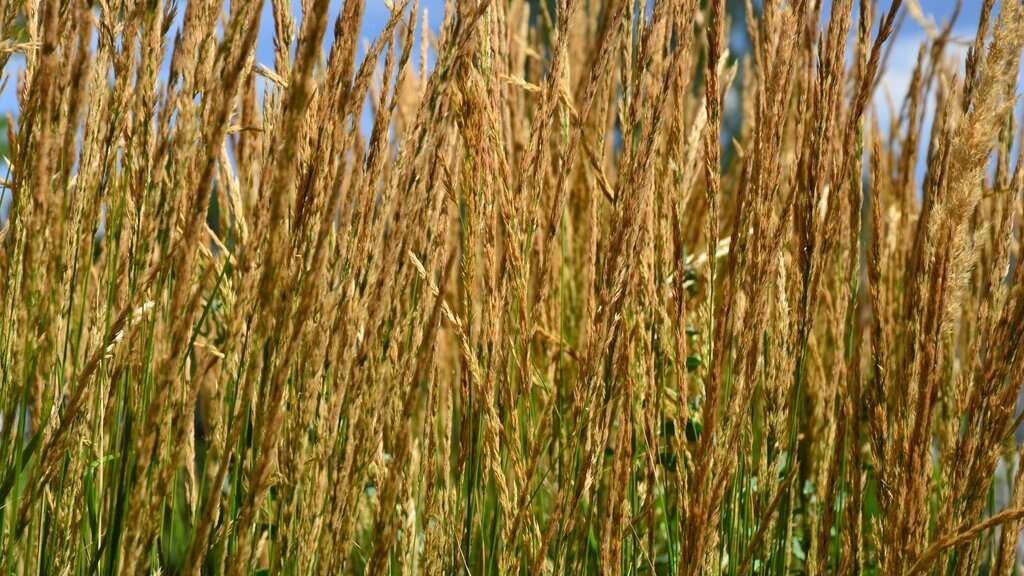
Feather Reed grass (Calamagrostis acutiflora) is known for its elegant, upright growth and arching foliage.
It usually reaches 3 to 6 feet, making it a perfect focal point, border, or privacy screen.
Its green leaves turn golden in the fall, and its seed heads persist into winter, adding interest to the landscape.
To maintain it, just cut back in early spring to encourage new growth.
Feather reed grass thrives in full sun but can handle partial shade, prefers well-drained soil, and tolerates wet soils, a real bonus for areas with heavy rainfall.
On average, expect to pay $15-$25 per plant, depending on the size.
What Does Feather Reed Look Like?
- Tall and sleek with an upright, vase-like shape that adds structure and elegance to gardens.
- Green, narrow leaves with a slightly arching form, turning golden-yellow in the fall.
- Feathery plumes emerge in early summer, first light purple or pinkish before maturing into creamy tan stalks that persist through winter.
2. Fountain Grass
Fountain grass (Pennisetum alopecuroides) is a Midwest favorite because of its versatile plants and soft, feathery blooms.
With its graceful clumps, it adds texture and movement to any garden design.
This grass reaches 2 to 4 feet high and comes with bright green leaves that transition to bronze or gold in fall.

Fountain grass loves full sun and well-drained soil, which means it’s a low-maintenance option for borders or container gardens.
It only needs to be cut back in early spring.
Costs typically range from $10–$30 per plant.
What Does Fountain Grass Look Like?
- Forms a graceful, rounded mound of finely textured, arching green foliage.
- Soft, fuzzy seed heads resembling foxtails emerge in mid-to-late summer in shades of rosy pink, purple, or tan.
- Fall foliage turns gold, copper, or deep reddish-bronze, creating a stunning seasonal display.
3. Switchgrass
Switchgrass (Panicum virgatum), a native plant, is a hardy, tall grass with arching foliage that grows 3 to 6 feet high.
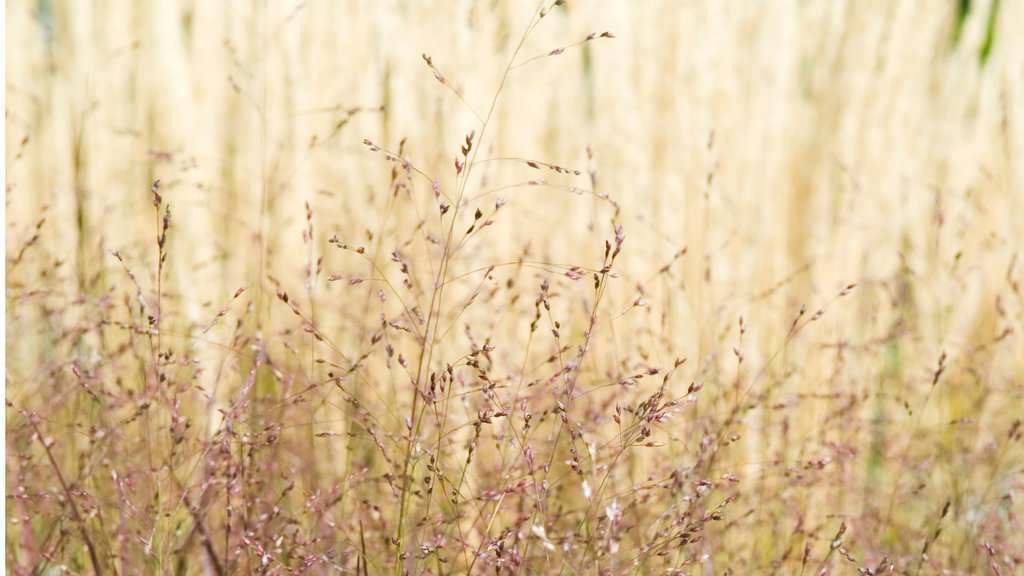
Its blue-green foliage and airy seed heads provide a stunning view from summer to winter.
As a native grass, it’s well-adapted to Midwest conditions, thriving in full sun and tolerating both dry conditions and occasional flooding.
Switchgrass usually costs $10-$22 per 1 pound of seeds, and it’s a fantastic choice for erosion control or creating a natural meadow appearance.
What Does Switchgrass Look Like?
- Tall and airy, with vertical, blue-green blades that take on golden-orange to deep red hues in fall.
- Wispy, cloud-like seed heads with a delicate, silvery or purple tint float above the foliage, giving the plant an ethereal quality.
- Develops a stiff, upright clumping habit, making it a great privacy screen or backdrop for other plants.
4. Little Bluestem
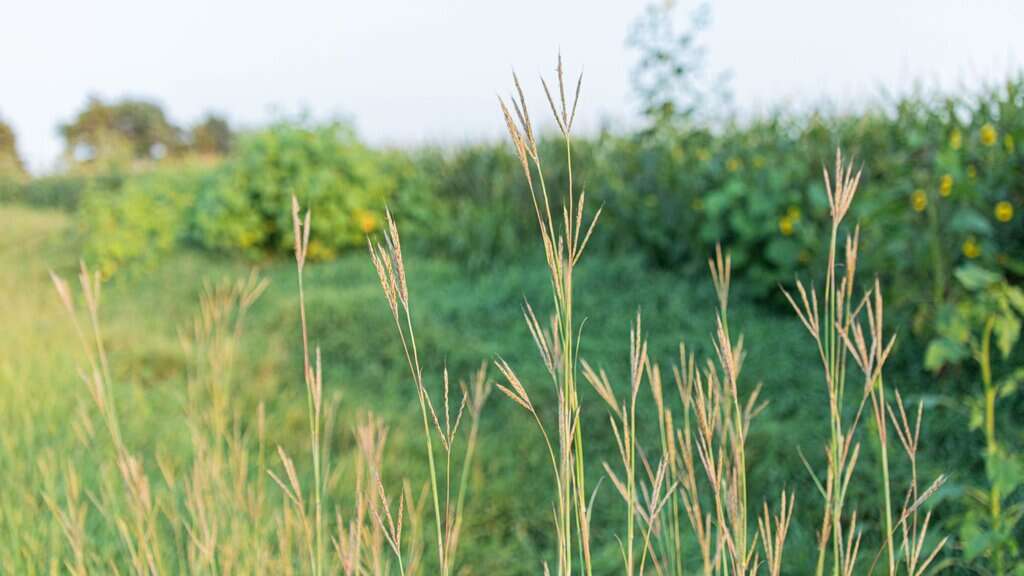
Another native plant, little bluestem (Schizachyrium scoparium) offers blue-green foliage that shifts to fiery red and orange in autumn.
Growing 2 to 4 feet tall, this dwarf grass is perfect for smaller gardens or borders.
Little bluestem prefers full sun and well-drained soil, requiring little maintenance once established.
At $5–$15 per 1000 seeds, it’s an affordable way to add four seasons of beauty.
What Does Little Bluestem Look Like?
- Compact and bushy, with slender blue-green stems that stand upright and don’t flop over.
- Dramatic fall colors, turning brilliant shades of red, orange, and purple, often described as “sunset in a plant.”
- Fluffy white seed tufts catch the light beautifully, creating a shimmering effect in the garden.
5. Indian Grass
Indian Grass (Sorghastrum nutans) is a native warm-season grass that reaches 4 to 7 feet.
It’s a hardy, deep-rooted grass that adds height and movement to prairie-style gardens, meadows, and naturalized landscapes.

Costs vary, but you can expect to pay $8-$20 per 1000 seeds or $10-$25 per plant, making it an affordable, eco-friendly alternative to non-native grasses.
What Does Indian Grass Look Like?
- Tall and flowing, with blue-green foliage that turns deep gold, copper, and burnt orange in autumn.
- Golden, feathery seed heads stand tall, shimmering in the sunlight and providing movement in the wind.
- Forms a loose, upright clump with arching blades that give it a soft, meadow-like look, perfect for naturalistic landscapes.
Which is The Easiest Garden Ornamental Grasses to Grow?
If we had to pick, little bluestem (Schizachyrium scoparium) is the usual go-to for Midwest gardens.
It’s a low-maintenance beauty, native to the region, and is drought tolerant. It thrives in a wide range of soils with minimal care once established.
Another solid option is prairie dropseed (Sporobolus heterolepis). It’s also a native grass with similar low-maintenance traits and a fine texture.
Ornamental Grasses to Avoid in the Midwest
While ornamental grasses are a fantastic choice, some species can cause headaches.
Invasive species can spread aggressively, outcompeting native plants and disrupting your garden design. For the Midwest ecosystem, these include:
- Reed Canary Grass (Phalaris arundinacea) : Some forms spread aggressively and outcompete native plantain wetlands and uplands, making it a poor choice for controlled gardens.
- Japanese Silver Grass (Miscanthus sacchariflorus): Also called Amur silver grass, this one spreads rapidly via underground stems, forming dense stands that outcompete native plants.
- Pampas Grass ( Cortaderia selloana ) : Even though it looks amazing, this warm-season grass struggles with Midwest winters and can become invasive in milder regions. It also produces large amounts of wind-dispersed seeds, which can spread to unintended areas.
Unfortunately, many invasive grasses are still sold at garden centers.
They’re even often marketed under appealing names like “low-maintenance,” “fast-growing,” or “drought-tolerant.”
While these traits seem like something you’d want, they usually indicate aggressive spread, making these plants challenging to control once established.
Plant tags and store labels rarely mention a species’ invasive potential, and in some cases, sellers may not even be aware of the risks.
Here’s how you can make sure you avoid them:
Check online resources
Universities and conservation groups usually have updated lists of invasive species by region, so you can use them to check the grass type before buying.
The Midwest Invasive Plant Network, for example, is a great place to start your research.
Ask local experts
Local nurseries or even the SunCo team can help you navigate this issue with ease and choose a type of ornamental grass that won’t turn into an invasive nightmare.
Check the scientific names
These plants can have lots of common names, which can make researching problematic.
A good rule of thumb is to check the Latin name on the plan tap to verify if it’s an invasive species or not.
Double check fast-spreading and self-seeding plants
These types of descriptors are usually a sign the grass could be an invasive species.
If the label places a lot of focus on the plant’s ability to grow fast, it could do so by affecting the surrounding landscape.
We’ll Help You Make the Right Choice for Your Lawn
Ornamental grass is an excellent choice for your lawn, but if you’re worried about selecting the right type or potentially choosing an invasive species by accident, know you don’t have to do it alone.
Let’s grow something extraordinary together! Contact us today for expert advice and top-tier lawn care services.
Call us at (402) 553-5204 or visit our website to schedule a consultation with our lawn care experts.